

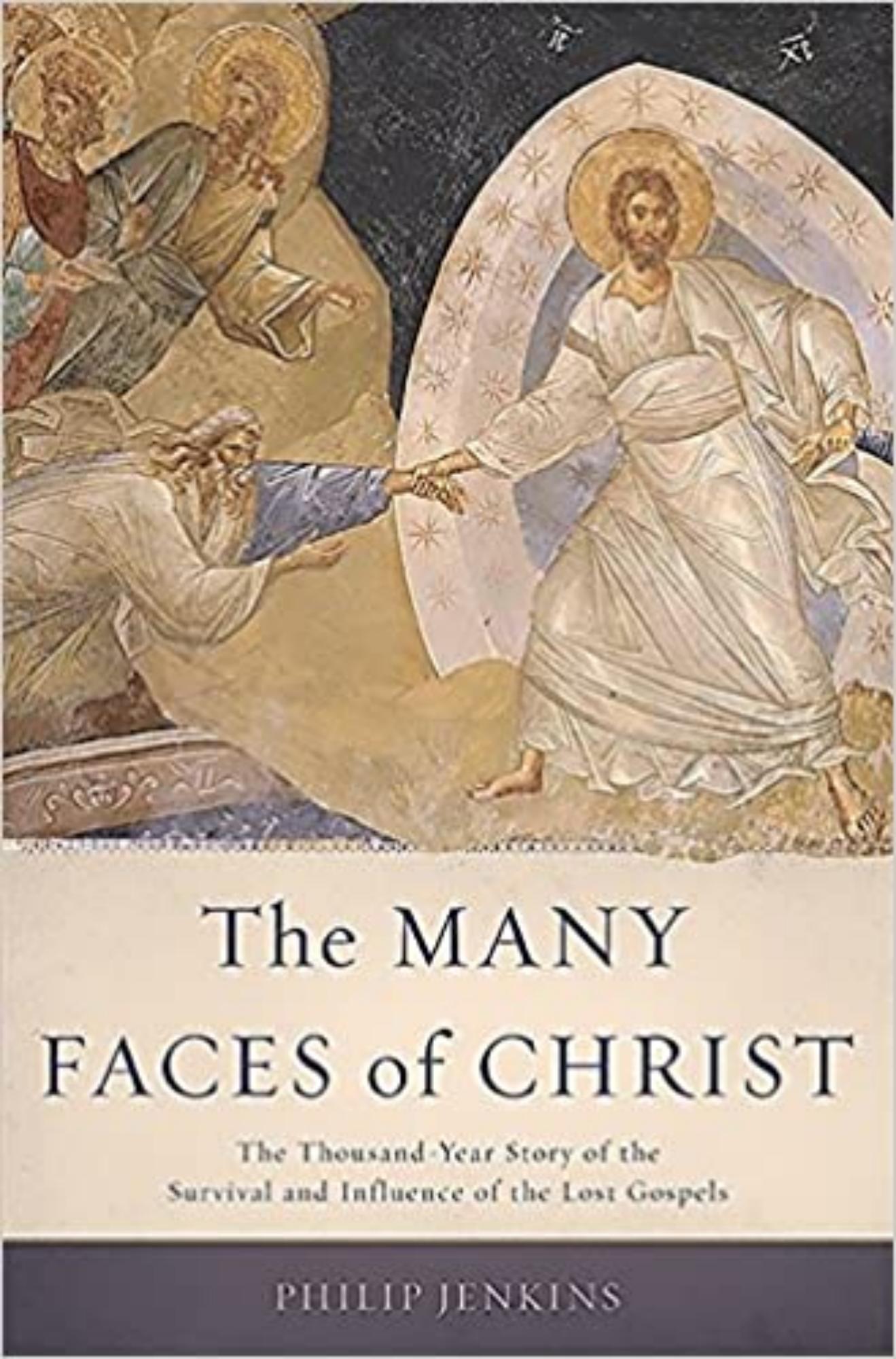
The standard account of early Christianity tells us that the first centuries after Jesus' death witnessed an efflorescence of Christian sects, each with its own gospel. We are taught that these alternative scriptures, which represented intoxicating, daring, and often bizarre ideas, were suppressed in the fourth and fifth centuries, when the Church canonized the gospels we know today: Matthew, Mark, Luke, and John. The rest were lost, destroyed, or hidden.
In The Many Faces of Christ, the renowned religious historian Philip Jenkins thoroughly refutes our most basic assumptions about the Lost Gospels. He reveals that dozens of alternative gospels not only survived the canonization process but in many cases remained influential texts within the official Church. Whole new gospels continued to be written and accepted. For a thousand years, these strange stories about the life and death of Jesus were freely admitted onto church premises, approved for liturgical reading, read by ordinary laypeople for instruction and pleasure, and cited as authoritative by scholars and theologians.
The Lost Gospels spread far and wide, crossing geographic and religious borders. The ancient Gospel of Nicodemus penetrated into Southern and Central Asia, while both Muslims and Jews wrote and propagated gospels of their own. In Europe, meanwhile, it was not until the Reformation and Counter-Reformation that the Lost Gospels were effectively driven from churches. But still, many survived, and some continue to shape Christian practice and belief in our own day.
Offering a revelatory new perspective on the formation of the biblical canon, the nature of the early Church, and the evolution of Christianity, The Many Faces of Christ restores these Lost Gospels to their central place in Christian history.
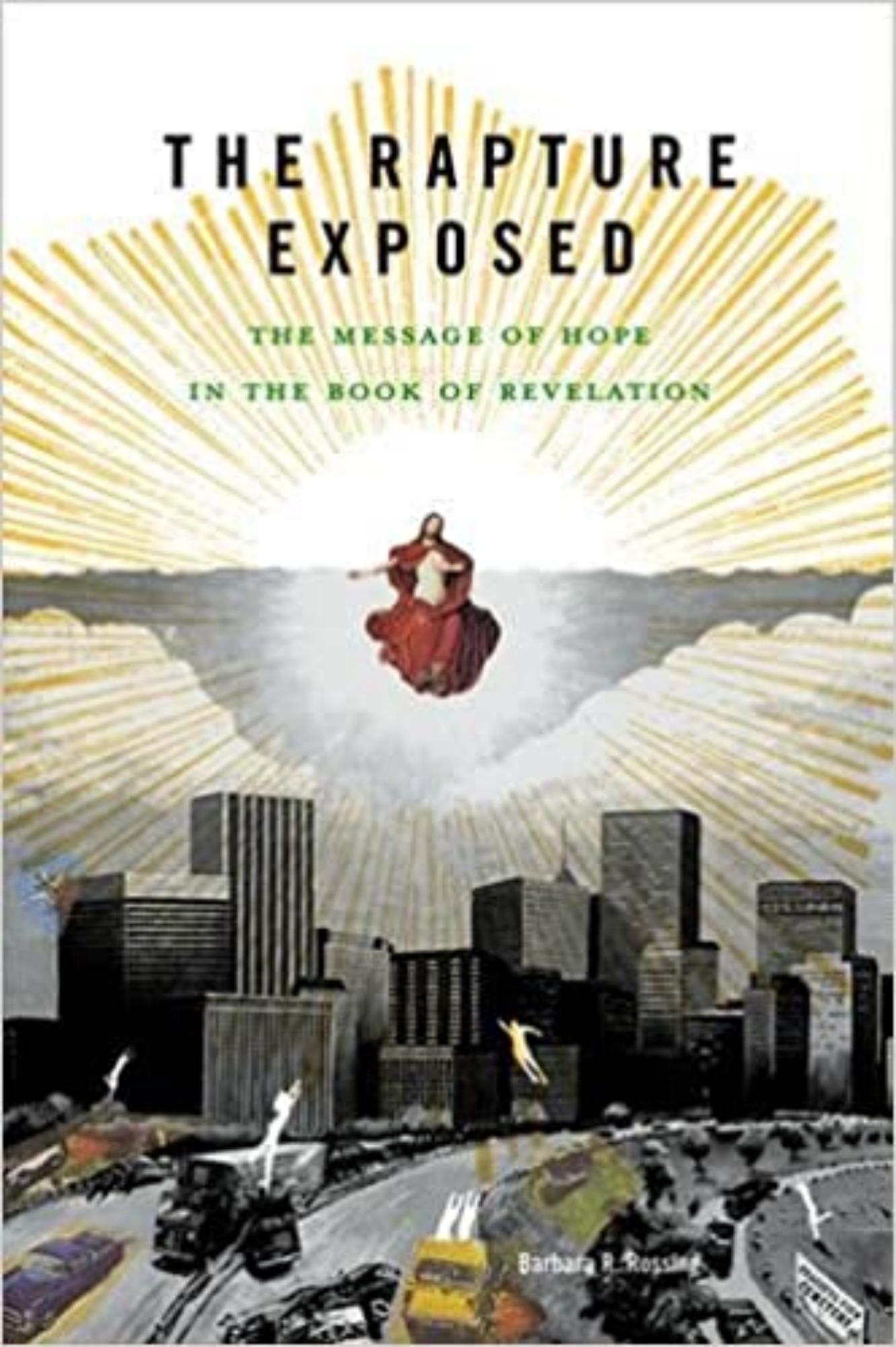
The idea of "The Rapture" -- the return of Christ to rescue and deliver Christians off the earth -- is an extremely popular interpretation of the Bible's Book of Revelation and a jumping-off point for the best-selling "Left Behind" series of books. This interpretation, based on a psychology of fear and destruction, guides the daily acts of thousands if not millions of people worldwide. In The Rapture Exposed, Barbara Rossing argues that this script for the world's future is nothing more than a disingenuous distortion of the Bible. The truth, Rossing argues, is that Revelation offers a vision of God's healing love for the world. The Rapture Exposed reclaims Christianity from fundamentalists' destructive reading of the biblical story and back into God's beloved community.
"It is no small task which Dr. Bavinck has undertaken, to tell in sixty-two small pages all that Christianity is, and that, in a series in which it is brought into comparison with other 'great religions'. He has fulfilled this task, however, in a most admirable manner. His method is, first, to point out what all Christians are agreed upon; and then to give an historical account of Christianity in its origins and it its progressive manifestations in the great forms of the Orthodox Eastern, the Romish, the Lutheran, Reformed Churches, with further descriptions of the forms it has taken since, in Anabaptism and Socinianism, and the New Protestantism rooted in the Enlightenment. His plan thus resolves itself into an informal sketch of the historical development of Christianity. This sketch is written with remarkable grasp of details and an equally remarkable power of synthesis. We cannot imagine how the work could be done better." -B.B. Warfield
128 pages
Every pastor wants to have a vibrant, dynamic church. There are many popular models for church growth based on outstanding churches led by outstanding pastors. But unfortunately, specific models are temporary and go out of style quickly. Author Gary McIntosh explores the biblical principles for church growth and applies them to today's culture. Instead of concentrating on the ephemeral how of church growth, he focuses on the unchanging why. McIntosh defines church growth as ''all that is involved in bringing men and women who do not have a personal relationship with Jesus Christ into fellowship with him and into responsible church membership.'' In other words, church growth is effective evangelism, not a methodology for increasing membership. According to Biblical Church Growth, growing churches always evidence a desire to fulfill the Great Commission by cooperating with God in building a faithful church. Using personal stories and current statistics as well as numerous biblical examples, the author sets forth ten basic principles that provide an eternal foundation for helping any church-large or small-achieve lasting vitality and growth.
192 pages
A great starting point for sermons on the nature of God and His will.
--Pulpit Helps, December 2007
An experience of biblical theology from which any believer can benefit.
--Dianne Bergant, The Bible Today, May 2009
234 pages
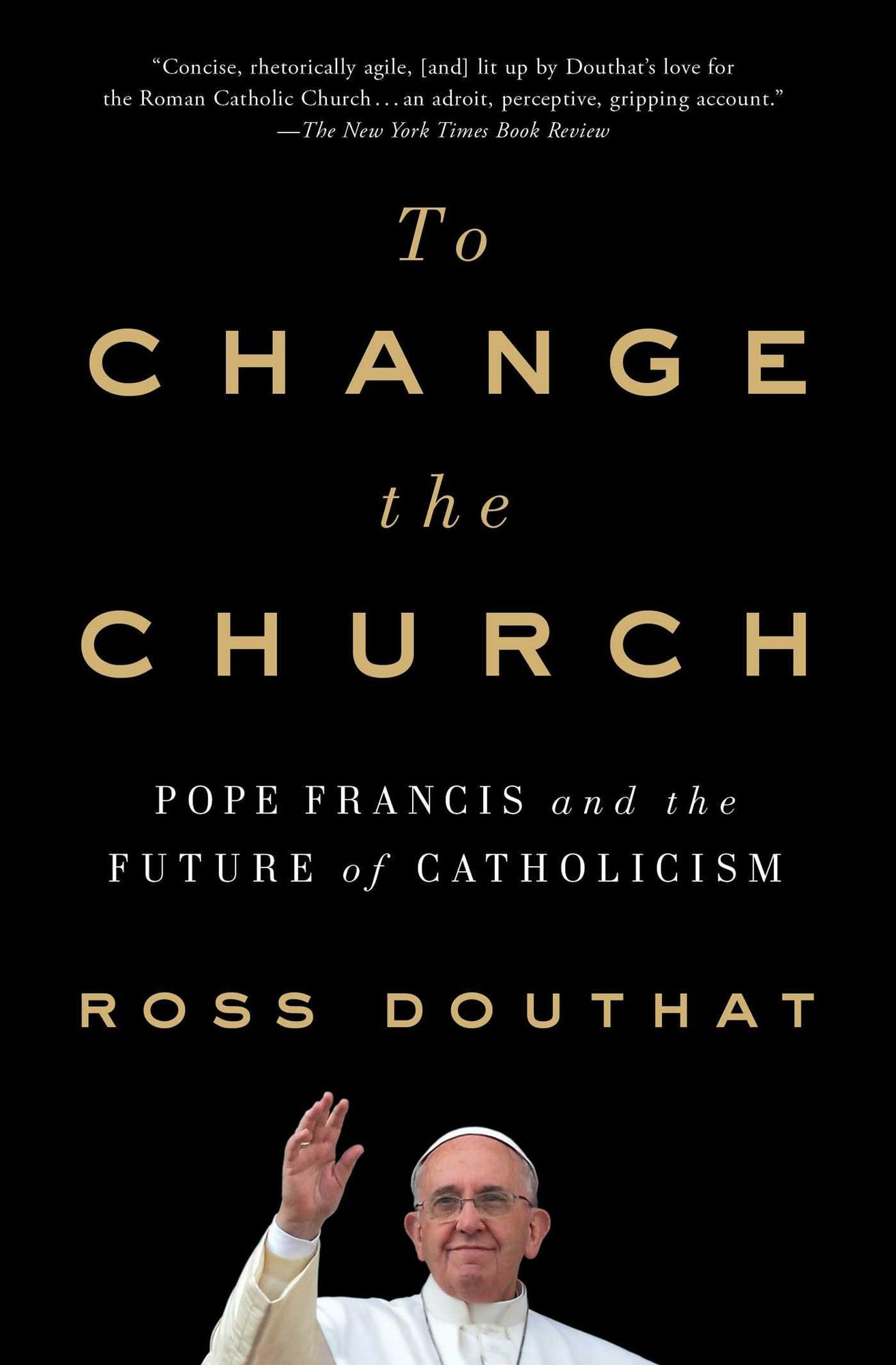
Born Jorge Mario Bergoglio in 1936, today Pope Francis is the 266th pope of the Roman Catholic Church. Pope Francis’s stewardship of the Church, while perceived as a revelation by many, has provoked division throughout the world. “If a conclave were to be held today,” one Roman source told The New Yorker, “Francis would be lucky to get ten votes.”
In his “concise, rhetorically agile…adroit, perceptive, gripping account (The New York Times Book Review), Ross Douthat explains why the particular debate Francis has opened—over communion for the divorced and the remarried—is so dangerous: How it cuts to the heart of the larger argument over how Christianity should respond to the sexual revolution and modernity itself, how it promises or threatens to separate the church from its own deep past, and how it divides Catholicism along geographical and cultural lines. Douthat argues that the Francis era is a crucial experiment for all of Western civilization, which is facing resurgent external enemies (from ISIS to Putin) even as it struggles with its own internal divisions, its decadence, and self-doubt. Whether Francis or his critics are right won’t just determine whether he ends up as a hero or a tragic figure for Catholics. It will determine whether he’s a hero, or a gambler who’s betraying both his church and his civilization into the hands of its enemies.
Orthodoxy (1908) is a book by G. K. Chesterton that has become a classic of Christian apologetics. Chesterton considered this book a companion to his other work, Heretics, writing it expressly in response to G.S. Street's criticism of the earlier work, "that he was not going to bother about his theology until I had really stated mine". In the book's preface Chesterton states the purpose is to "attempt an explanation, not of whether the Christian faith can be believed, but of how he personally has come to believe it." In it, Chesterton presents an original view of Christian religion. He sees it as the answer to natural human needs, the "answer to a riddle" in his own words, and not simply as an arbitrary truth received from somewhere outside the boundaries of human experience. The book was written when Chesterton was an Anglican. He converted to Catholicism 14 years later. Chesterton chose the title, Orthodoxy, to focus instead on the plainness of the Apostles' Creed, though he admitted the general sound of the title was "a thinnish sort of thing".
Getting a glimpse into the future is always intriguing, especially when that glimpse comes from God's Word. But let's face it, the book of Revelation has some pretty weird stuff in it: seven-headed beasts, locusts with gold crowns, a city coming down from the sky. What does it all mean, and how does it help you in your Christian faith? This lighthearted yet accurate guide to the last book of the Bible will help you overcome the confusion. Engaging and user-friendly, The Book of Revelation Made Clear helps you:
Understand the message of this often misunderstood book chapter by chapter
Discover what Revelation says about how end-time events will unfold
Make sense of all the symbolism
See how Revelation relates to other parts of the Bible
Learn how others interpret controversial parts
Worship God with a new vision of his glory and ultimate triumph, and of what that means for you
In this invaluable contribution to the continuing debate about religious belief, David Adams Richards offers an exhilaratingly fresh perspective and a voice more impassioned, heartfelt, and sometimes furious, than anything written about God by an atheist.
David Adams Richards, one of Canada’s most beloved and celebrated authors, has been wrestling with questions of morality, faith, and religion ever since he was a child. They have always informed his fiction. Now he examines their role in his own life and spells out his own belief, in what is his most self-revealing work to date. With characteristic honesty, Richards charts his rocky relationship with his cradle Catholicism, his battles with personal demons, his encounters with men who were proud to be murderers, and the many times in his life when he has been witness to what he unapologetically calls miracles. In this subtly argued, highly personal polemic, David Adams Richards insists that the presence of God cannot be denied, and that many of those who espouse atheism also know that presence, though they would not admit it to anyone — including themselves. Every follower of today’s battle between faith and atheism, and every lover of David Adams Richards’ superb fiction, will find God Is revelatory.
Scholars from biblical studies and theology have recently been engaged in various ways in the project of theological interpretation of Scripture. This literature has raised issues about the theological content of the biblical material, authorial intention, the reception and formation of the Bible as Christian Scripture, the importance of the canonical form of the text, and the relationship between Scripture and the Rule of Faith. With this recent interdisciplinary debate in mind, the fourth annual Los Angeles Theology Conference focuses on the theological and doctrinal dimensions to the biblical texts drawing on scholars of biblical studies and theology in order to do so. The question that frames it is, "How does the voice of God come to us in the text of Scripture?"
Four Views on Creation, Evolution, and Intelligent Design presents the current "state of the conversation" about origins among evangelicals representing four key positions:
Young Earth Creationism - Ken Ham (Answers in Genesis)
Old Earth (Progressive) Creationism - Hugh Ross (Reasons to Believe)
Evolutionary Creation - Deborah B. Haarsma (BioLogos)
Intelligent Design - Stephen C. Meyer (The Discovery Institute)
The contributors offer their best defense of their position addressing questions such as: What is your position on origins - understood broadly to include the physical universe, life, and human beings in particular? What do you take to be the most persuasive arguments in defense of your position? How do you demarcate and correlate evidence about origins from current science and from divine revelation? What hinges on answering these questions correctly?
The evenness and quality of this series are remarkable.
--Christianity Today
The Tyndale volumes have long been the premier shorter-length commentary series on both Testaments throughout the English-speaking world.
--Craig Blomberg, Denver Seminary
283 pages
With Christology, Veli-Matti Kärkkäinen provides an up-to-date, comprehensive introduction to the topic in which voices from around the globe are heard. He offers three main perspectives on Christology (biblical, historical, and contemporary) and attempts to combine classical and contextual work done in Christology over the course of church history.
Kärkkäinen compares and contrasts how the Gospel writers and the apostle Paul understood the person and work of Jesus Christ. He then focuses on the christological discussions that took place in the early church and the ways in which scholars have attempted to understand Jesus. The heart of Christology is an extended discussion of ten major Western Christologies from well-known theologians such as Karl Barth, Stanley Grenz, and John Hick.
The final part of the book delves into contextualized interpretations about Christ in various parts of the world. Feminist, process, black, and postmodern Christologies extant in North America and Europe are discussed and evaluated. Asian (Christ as universal Savior), African (Christ as Ancestor), and Latin American (Christ as Liberator) Christologies round out the discussion.
Christology is ideal for readers who desire to know how the global Christian community understands the person and work of Jesus Christ.
Martin Lings gives us powerful reasons for believing that we have now reached a point in time from which 'the end' - whatever that may mean - is already in sight without being immediately imminent. The Eleventh Hour has its roots in the parable of the laborers in the vineyard. The following questions run through the book: why did the latecomers receive the same wage as those who had laboured throughout the heat of the day? Why were they the first to be paid? And why, did Christ say 'And the last shall be first?' These questions are answered in the light of the concept of the Millennium, which is clearly the equivalent of the new Golden Age of the next cycle of time, and which is found in all three monotheistic religions, bringing them into line, in this respect, with Hinduism, Greco-Roman Antiquity and Buddhism.
148 pages
"A creative rethinking of the Trinity in Light of human suffering. . . In the suffering of Christ we see that we have a God who suffers with us out of a faithful love toward us."
The Christian Century
"Here is a theology that challenges the restrictive suppositions of our time, inviting not only the theological establishment but also church leaders and teachers everywhere to assess and perhaps re-think their own theologies in light of this remarkable study."
The Christian Ministry
Bestselling Christian author, activist, and scholar Tony Campolo and his son Bart, an avowed Humanist, debate their spiritual differences and explore similarities involving faith, belief, and hope that they share.
Over a Thanksgiving dinner, fifty-year-old Bart Campolo announced to his Evangelical pastor father, Tony Campolo, that after a lifetime immersed in the Christian faith, he no longer believed in God. The revelation shook the Campolo family dynamic and forced father and son to each reconsider his own personal journey of faith—dual spiritual investigations into theology, faith, and Humanism that eventually led Bart and Tony back to one another.
In Why I Left, Why I Stayed, the Campolos reflect on their individual spiritual odysseys and how they evolved when their paths diverged. Tony, a renowned Christian teacher and pastor, recounts his experience, from the initial heartbreak of discovering Bart’s change in faith, to the subsequent healing he found in his own self-examination, to his embracing of his son’s point of view. Bart, an author and Humanist chaplain at the University of Southern California, considers his faith journey from Progressive Christianity to Humanism, revealing how it affected his outlook and transformed his relationship with his father.
As Why I Left, Why I Stayed makes clear, a painful schism between father and son that could have divided them irreparably became instead an opening that offered each an invaluable look not only at what separated them, but more importantly, what they shared.
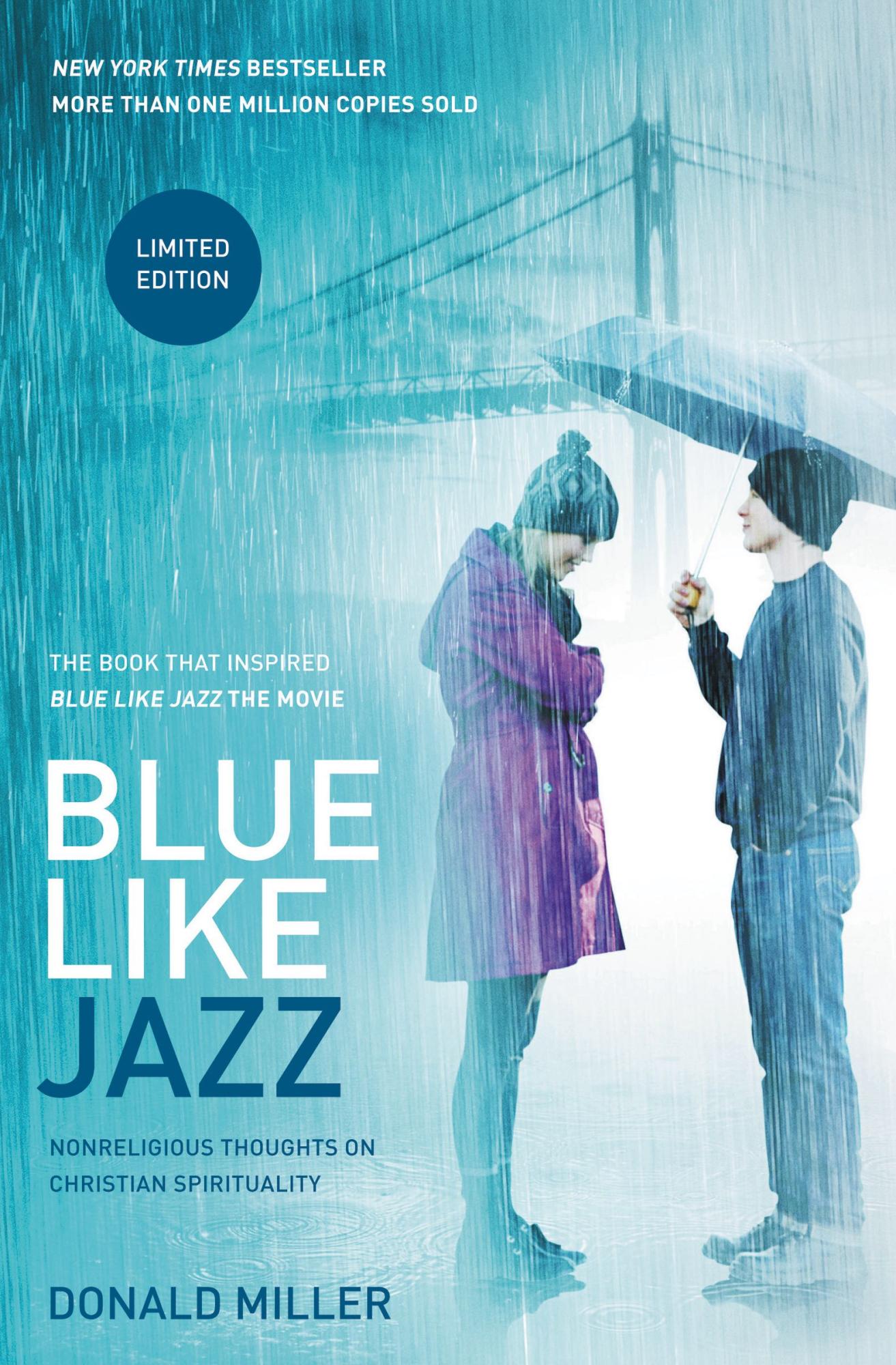
The runaway New York Times bestseller that became a cornerstone of Christian nonfiction, Blue Like Jazz is a fresh and original perspective on life, love, and redemption.
"I never liked jazz music because jazz music doesn't resolve…Sometimes you have to watch somebody love something before you can love it yourself. It is as if they are showing you the way. I used to not like God because God didn't resolve. But that was before any of this happened."
Donald Miller was raised in a strict Texas denomination where he was only vaguely familiar with a distant God. When he grew older, he ran all the way to the least-religious university in the US: Rice College in Portland, Oregon. Still, God pursued him. When he came to know Jesus, he pursued the Christian life with great zeal. However, within a few years he had a successful ministry that ultimately left him feeling empty, burned out, and, once again, far away from God.
In this intimate, non-judgmental, and soul-searching account, Miller describes his remarkable journey with and back to the infinitely loving God, helping you…
discover how the Christian faith is still relevant in a postmodern culture;
learn how to have a genuine encounter with a God who is real; and
enjoy a renewed sense of passion for your life.
Blue Like Jazz is a gentle, honest resource for those curious about the Christian faith, or new to it, and offers a fresh and original perspective on life, love, and redemption.
256 pages
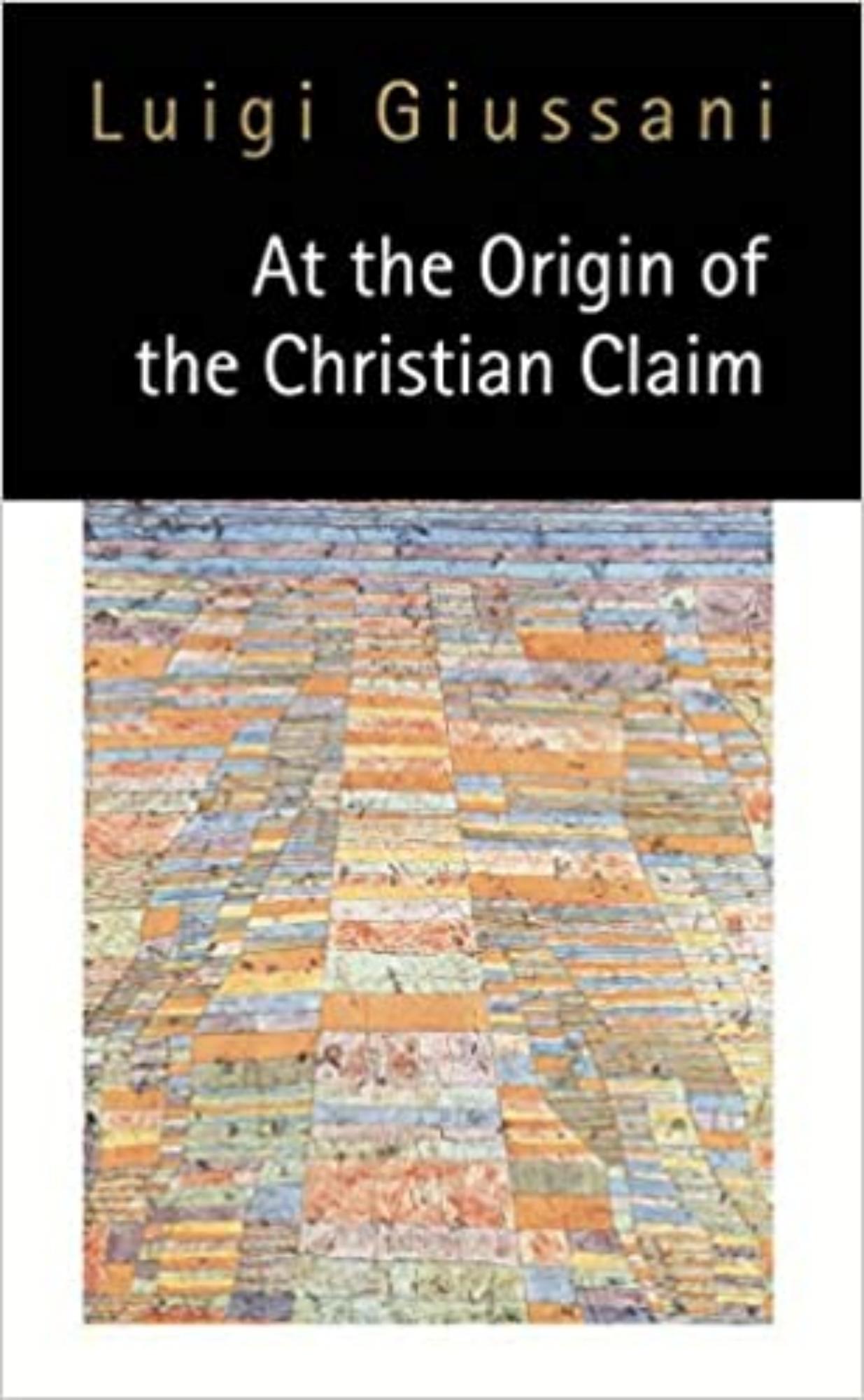
Giussani argues that if we accept the hypothesis that the mystery entered the realm of human existence and spoke in human terms, the relationship between the individual and God is no longer based on a moral, imaginative, or aesthetic human effort but instead on coming upon an event in one's life. Thus the religious method is overturned by Christ: in Christianity it is no longer the person who seeks to know the mystery but the mystery that makes himself known by entering history. At the Origin of the Christian Claim presents an intriguing argument supported with ample documentation from the gospels and other theological writings.
144 pages
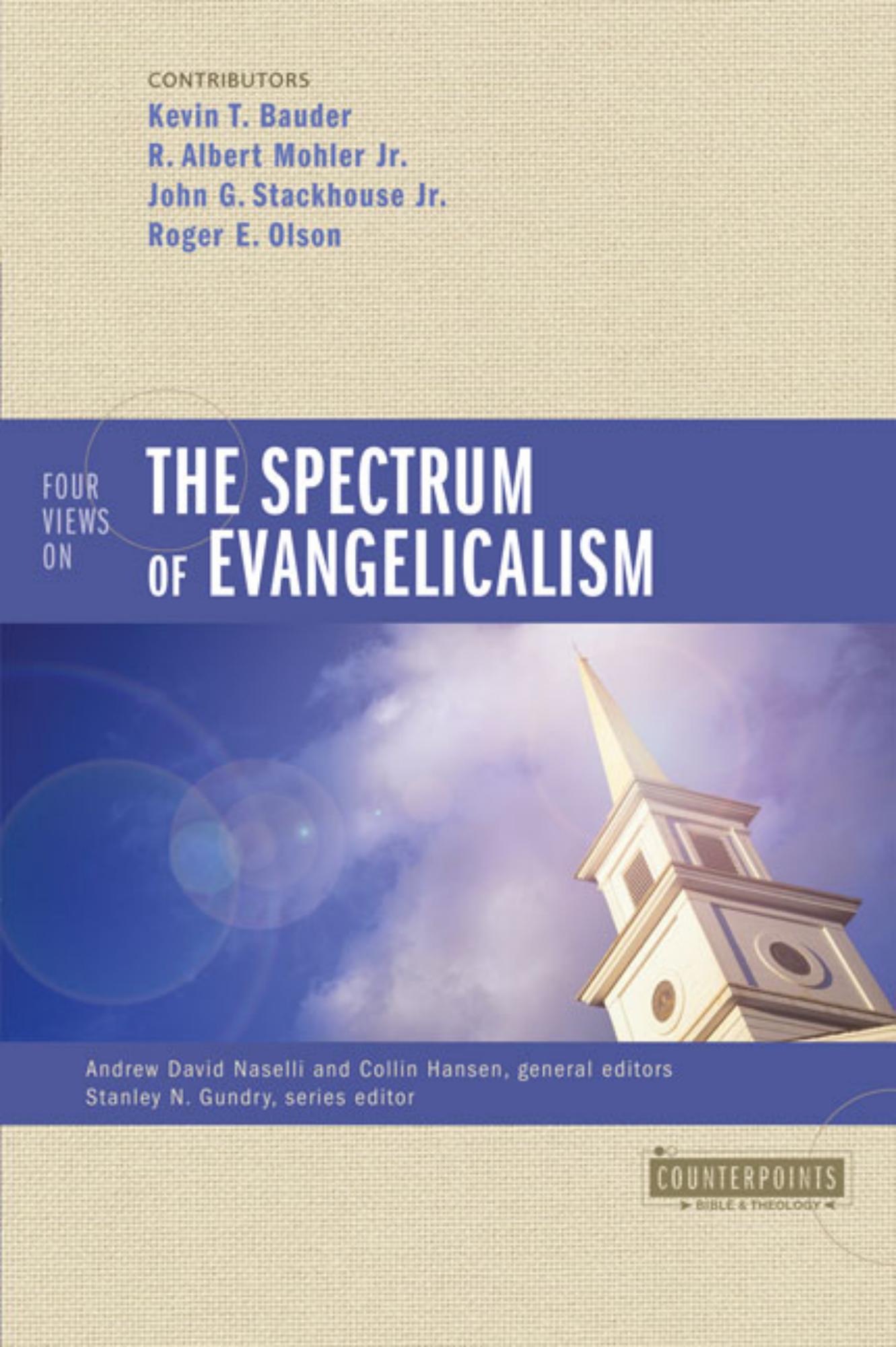
Understand the history, core values, and divisions as they've developed within the Evangelical Christian movement.
Four Views on the Spectrum of Evangelicalismcompares and contrasts four distinct positions on the current fundamentalist-evangelical spectrum. Each contributor offers their case for one of four primary views:
Fundamentalism – defended by Kevin T. Bauder
Conservative/confessional evangelicalism – defended by R. Albert Mohler Jr.
Generic evangelicalism – defended by John G. Stackhouse Jr.
Postconservative evangelicalism – defended by Roger E. Olson
Each author explains and defends his position, which is critiqued by the other three authors.
The Counterpoints series presents a comparison and critique of scholarly views on topics important to Christians that are both fair-minded and respectful of the biblical text. Each volume is a one-stop reference that allows readers to evaluate the different positions on a specific issue and form their own, educated opinion.
224 pages
With an estimated 250 million adherents, the Orthodox Church is the second largest Christian body in the world. This absorbing account of the essential elements of Eastern Orthodox thought deals with the Trinity, Christ, sin, humanity and creation as well as praying, icons, the sacraments and liturgy.
The headlines are clear: religion is on the decline in America as many people leave behind traditional religious practices. Diana Butler Bass, leading commentator on religion, politics, and culture, follows up her acclaimed book Christianity After Religion by arguing that what appears to be a decline actually signals a major transformation in how people understand and experience God. The distant God of conventional religion has given way to a more intimate sense of the sacred that is with us in the world. This shift, from a vertical understanding of God to a God found on the horizons of nature and human community, is at the heart of a spiritual revolution that surrounds us — and that is challenging not only religious institutions but political and social ones as well.
Grounded explores this cultural turn as Bass unpacks how people are finding new spiritual ground by discovering and embracing God everywhere in the world around us—in the soil, the water, the sky, in our homes and neighborhoods, and in the global commons. Faith is no longer a matter of mountaintop experience or institutional practice; instead, people are connecting with God through the environment in which we live. Grounded guides readers through our contemporary spiritual habitat as it points out and pays attention to the ways in which people experience a God who animates creation and community.
Bass brings her understanding of the latest research and studies and her deep knowledge of history and theology to Grounded. She cites news, trends, data, and pop culture, weaves in spiritual texts and ancient traditions, and pulls it all together through stories of her own and others' spiritual journeys. Grounded observes and reports a radical change in the way many people understand God and how they practice faith. In doing so, Bass invites readers to join this emerging spiritual revolution, find a revitalized expression of faith, and change the world.
In The Time That Remains, Agamben seeks to separate the Pauline texts from the history of the Church that canonized them, thus revealing them to be "the fundamental messianic texts of the West." He argues that Paul's letters are concerned not with the foundation of a new religion but rather with the "messianic" abolition of Jewish law. Situating Paul's texts in the context of early Jewish messianism, this book is part of a growing set of recent critiques devoted to the period when Judaism and Christianity were not yet fully distinct, placing Paul in the context of what has been called "Judaeo-Christianity."
Agamben's philosophical exploration of the problem of messianism leads to the other major figure discussed in this book, Walter Benjamin. Advancing a claim without precedent in the vast literature on Benjamin, Agamben argues that Benjamin's philosophy of history constitutes a repetition and appropriation of Paul's concept of "remaining time." Through a close reading and comparison of Benjamin's "Theses on the Philosophy of History" and the Pauline Epistles, Agamben discerns a number of striking and unrecognized parallels between the two works.
216 pages
"Can you Count the Clouds?" asks the voice of God from the whirlwind in the stunningly beautiful catalogue of nature-questions from the Old Testament Book of Job. Tom McLeish takes a scientist's reading of this ancient text as a centrepiece to make the case for science as a deeply human and
ancient activity, embedded in some of the oldest stories told about human desire to understand the natural world. Drawing on stories from the modern science of chaos and uncertainty alongside medieval, patristic, classical and Biblical sources, Faith and Wisdom in Science challenges much of the
current 'science and religion' debate as operating with the wrong assumptions and in the wrong space. Its narrative approach develops a natural critique of the cultural separation of sciences and humanities, suggesting an approach to science, or in its more ancient form natural philosophy - the
'love of wisdom of natural things' - that can draw on theological and cultural roots. Following the theme of pain in human confrontation with nature, it develops a 'Theology of Science', recognising that both scientific and theological worldviews must be 'of' each other, not holding separate
domains. Science finds its place within an old story of participative reconciliation with a nature, of which we start ignorant and fearful, but learn to perceive and work with in wisdom. Surprisingly, science becomes a deeply religious activity. There are urgent lessons for education, the political
process of decision-making on science and technology, our relationship with the global environment, and the way that both religious and secular communities alike celebrate and govern science.
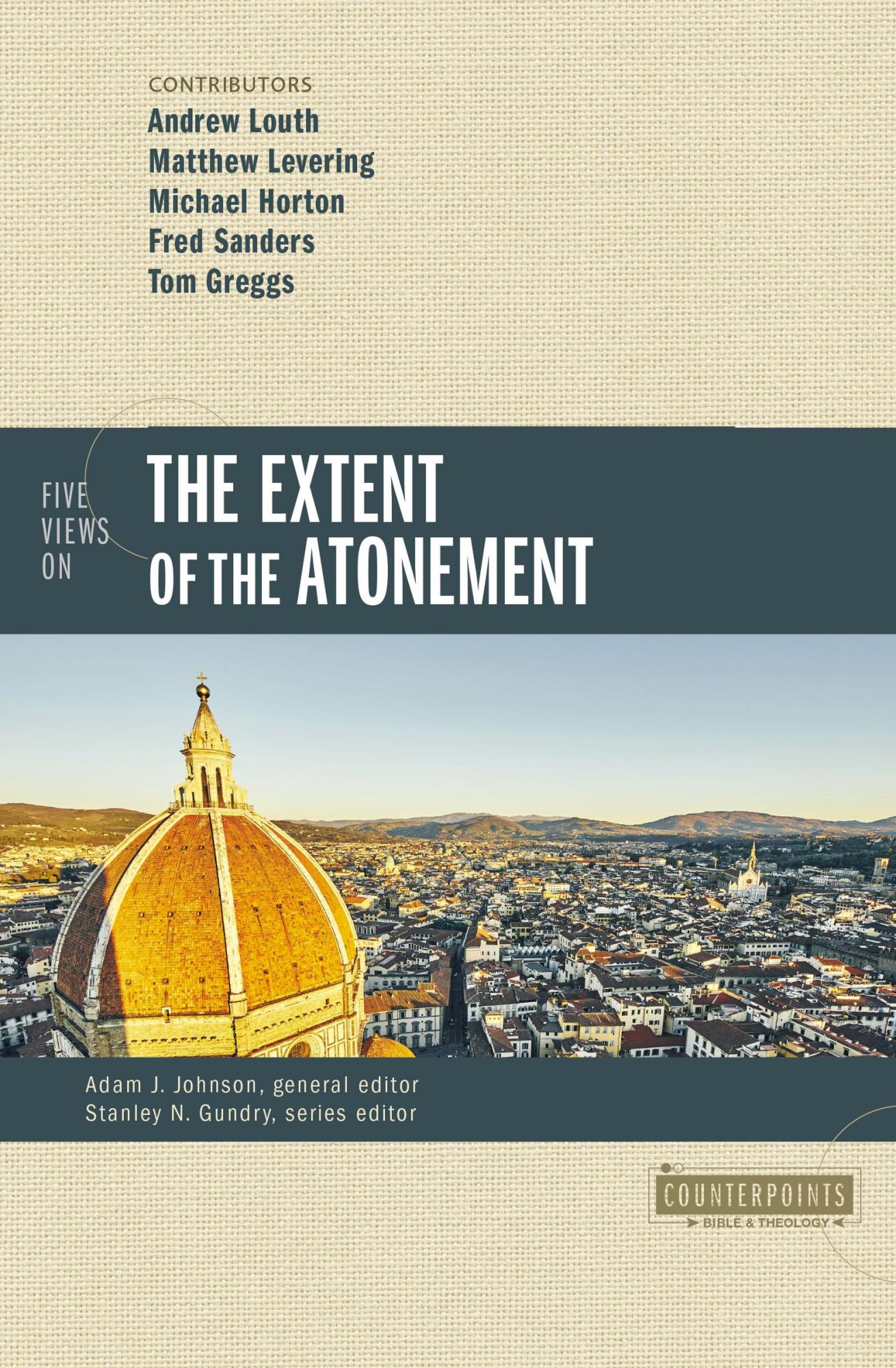
For whom did Christ die? Who may be saved? are questions of perennial interest and importance for the Christian faith. In a familiar Counterpoints format, this book explores the question of the extent of Christ's atonement, going beyond simple Reformed vs. non-Reformed understandings. This volume elevates the conversation to a broader plane, including contributors who represent the breadth of Christian tradition:
Eastern Orthodox: Andrew Louth
Roman Catholic: Matthew Levering
Traditional Reformed: Michael Horton
Wesleyan: Fred Sanders
Barthian Universalism: Tom Greggs
This book serves not only as a single-volume resource for engaging the views on the extent of the atonement but also as a catalyst for understanding and advancing a balanced approach to this core Christian doctrine. The Counterpoints series provides a forum for comparison and critique of different views on issues important to Christians. Counterpoints books address two categories: Church Life and Bible and Theology. Complete your library with other books in the Counterpoints series.
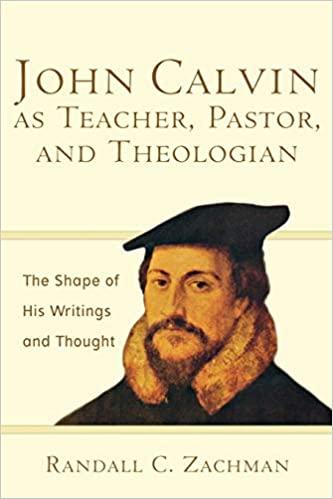
John Calvin has been the subject of numerous studies, but most have focused on one aspect of his thought or a limited selection of his writings. This study of Calvin adopts a uniquely holistic approach. Randall Zachman begins with a brief biography and considers Calvin's own understanding of his ministry as a teacher and pastor. From this perspective, he surveys Calvin's writings and their place in the work of reforming the church both through the training of clergy and the instruction of the laity. Zachman then considers Calvin as a theologian. In contrast to Martin Luther, Calvin sought to balance the verbal proclamation of the Word with an emphasis on the visible manifestation of God both in creation and in Christ. This study will be of great interest to Reformed clergy and to students of the Reformation and Calvinism.
278 pages
“What Stuart Murray has brought to light in his study of Anabaptist hermeneutics is of enormous theological and practical relevance, both for our understanding of the spectrum of Christian biblical interpretation and its contemporary appropriation. For too long we have neglected voices on the margins of the Christian churches which offer a perspective on biblical interpretation that picks up methods of reading deeply rooted in Scripture itself. Stuart Murray's book does much to illuminate one of the most challenging movements in Christianity. It will be of benefit to historians, theologians and all of us who are seeking ways of being faithful to Jesus Christ at the beginning of a new millennium.” – Christopher Rowland, Dean Ireland Professor of the Exegesis of Holy Scripture, Oxford University
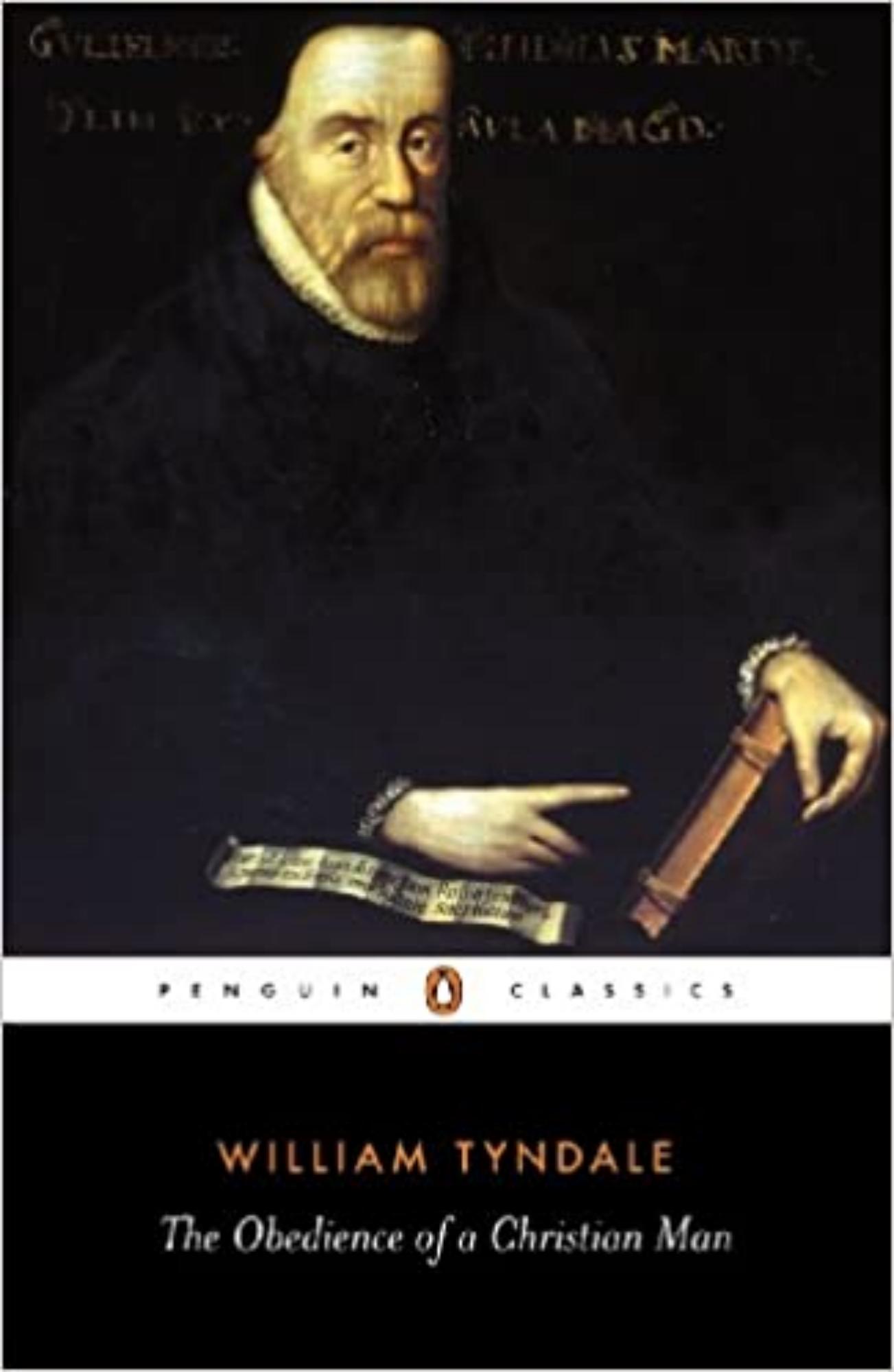
One of the key foundation books of the English Reformation, The Obedience of a Christian Man (1528) makes a radical challenge to the established order of the all-powerful Church of its time. Himself a priest, Tyndale boldly claims that there is just one social structure created by God to which all must be obedient, without the intervention of the rule of the Pope. He argues that Christians cannot be saved simply by performing ceremonies or by hearing the Scriptures in Latin, which most could not understand, and that all should have access to the Bible in their own language - an idea that was then both bold and dangerous. Powerful in thought and theological learning, this is a landmark in religious and political thinking.
272 pages
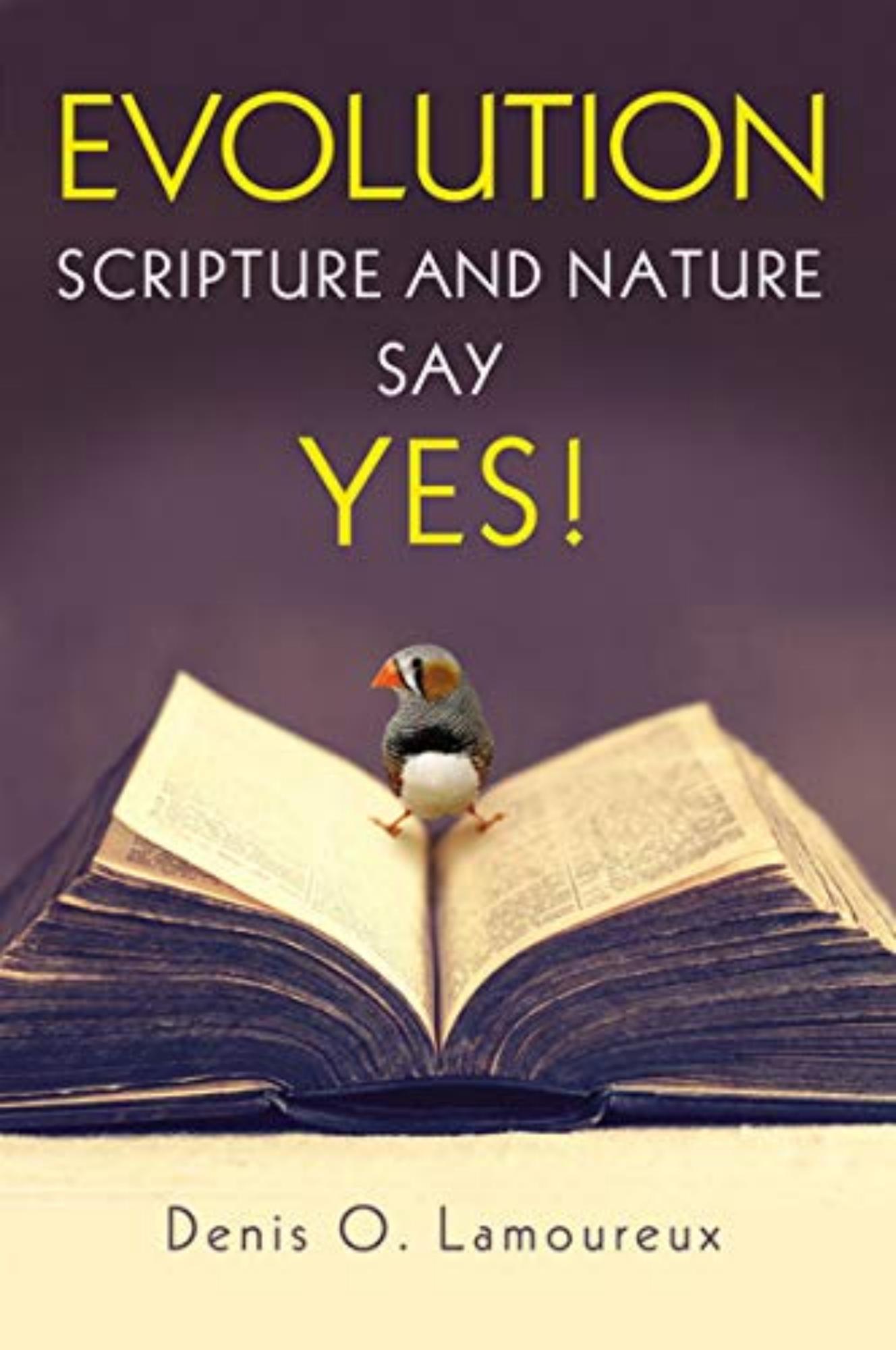
Christians throughout history have believed that God reveals himself both through Scripture and nature. The metaphor of God’s Two Books is often used to represent these two divine revelations.
The Book of God’s Words is the Bible. Scripture reveals inerrant spiritual truths. These include, the God of Christianity is the Creator of the heavens and the earth, the creation is very good, and only humans are created in the Image of God (Gen. 1:1, 27, 31).
The Book of God’s Works is the physical world. Nature declares God’s glory, eternal power, and divine nature (Ps. 19:1; Rom. 1:20). Through the gift of science, our Creator has blessed us with the ability to explore and understand the structure, operation, and origin of his creation.
Together God’s Two Books offer us a complementary divine revelation of who created the world and how he created it.
A majority of Americans view science and religion as being in conflict, according to the Pew Research Center. Christians and non-Christians alike share this view, yet if this perceived conflict misrepresents the relationship between modern science and Christian faith, then it is both unhelpful and unnecessary today.
In Evolution: Scripture and Nature Say Yes, theologian and scientist Denis O. Lamoureux reviews several options for embracing biblical Christianity and findings of science, including biological evolution. Holding to a high view of Scripture alongside an expert appreciation for scientific discovery, Lamoureux further outlines a way to understand passages referring to the natural world in the Bible and also demonstrates how modern science can point toward God.
Lamoureux shares his own story along the way, recounting struggles many readers will relate to on his journey toward PhDs in both theology and biology and a fruitful relationship between the two.
Topics in this book include:
A biblical model of intelligent design in nature based on Psalm 19 and Romans 1.
Examination of the ancient science in Scripture, such as a flat earth and 3-tier universe.
Comparison of different Christian views on origins—young earth creation, progressive creation (old earth creation), and evolutionary creation.
Criticisms of the atheistic interpretation of evolution held by Richard Dawkins and his belief that intelligent design is merely an illusion.
Galileo’s peaceful relationship between Scripture and nature, including his view that “the intention of the Holy Spirit [in the Bible] is to teach us how one goes to heaven, and not how heaven goes.”
Darwin’s religious beliefs and evidence of the impact that intelligent design had on him throughout his life, along with his claim, “It seems to me absurd to doubt that a man may be an ardent Theist [personal God] and an evolutionist.”
Believers wanting to honor God’s Two Books—Scripture and Nature—faithfully and without conflict will find an excellent introduction in Evolution: Scripture and Nature Say Yes.
A pivotal figure of the Protestant Reformation, John Calvin's vision of God changed the world. Calvin (1509-1564), who, in response to God's call became a pastor against his natural inclinations, transformed an unimportant city into a powerful force for religious reform. Today, many know of John Calvin as an historical figure, but few have read his writings or are familiar with the personal spirituality that drove his life. This volume presents the main facets of Calvin's faith, including his personal religious experience, his pastoral ministry, and his revolutionary theological vision. This is a perfect resource for those seeking to learn about the man behind the legacy.
160 pages
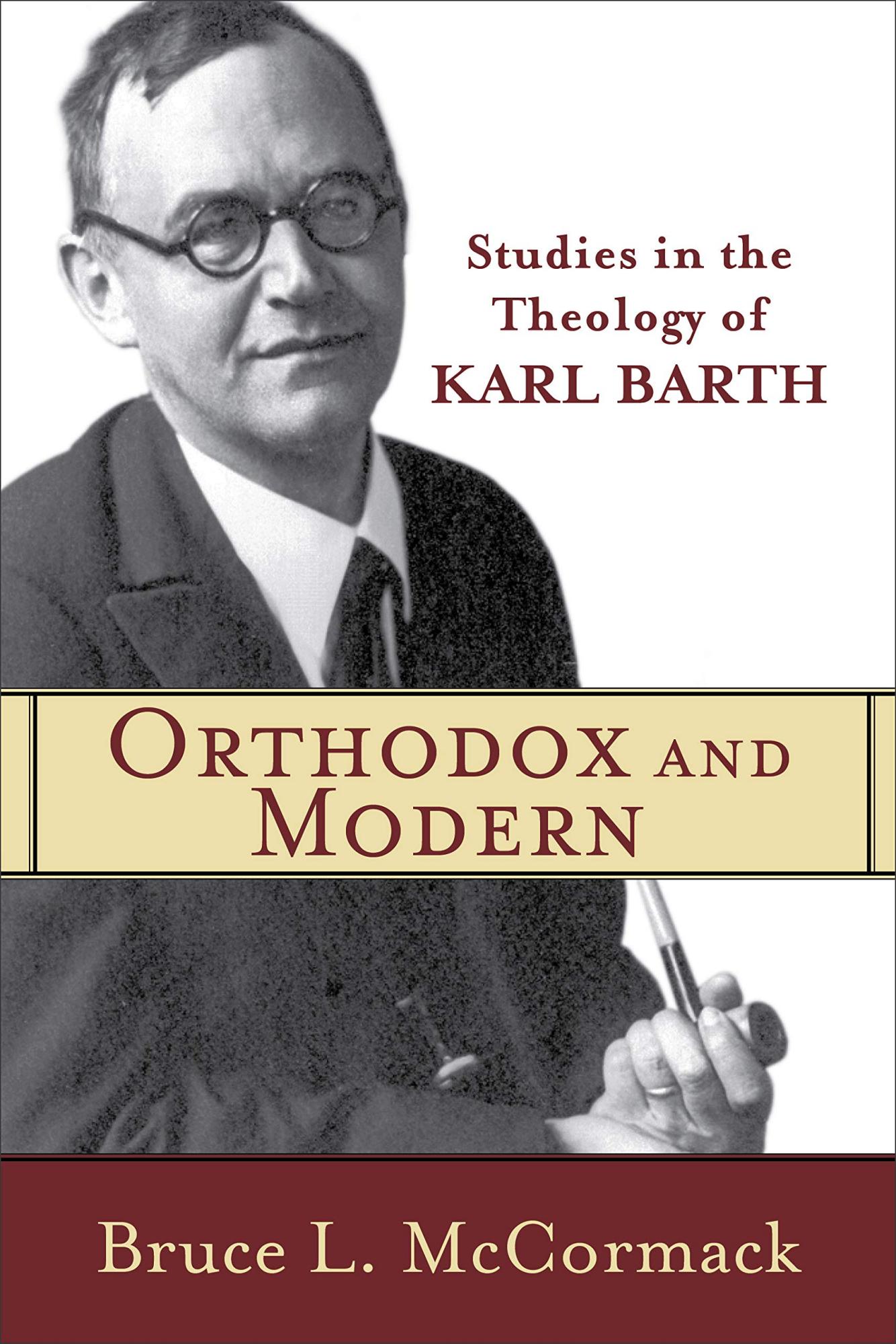
In this enlightening study, Bruce McCormack reconsiders the importance of Karl Barth's theology. McCormack begins with Barth's relation to nineteenthcentury theologians and then turns to critique the works of contemporary authors within postmodern circles who have attempted to reinterpret Barth to fit their categories. The later sections of McCormack's study probe more deeply into Barth's theology and consider European perspectives. As the title affirms, McCormack suggests that Barth was, in fact, both orthodox and modern in his theology. McCormack has established a reputation as a thoughtful scholar, and his study of Barth will certainly find a broad audience in academic circles. But serious readers and clergy will also find it a helpful guide to Barth's theology and his continuing importance.
An updated and revised version of a book that has impacted thousands of churches: Are you tired of how consumerism has stolen the soul of Christmas? This year, take a stand! Join the groundswell of Christ-followers who are choosing to make Christmas what it should be, a joyous celebration of Jesus’ birth that enriches our hearts and the world around us, not a retail circus that depletes our pocketbooks and defeats our spirits.
Advent Conspiracy shows you how to substitute consumption with compassion by practicing four simple but powerful, countercultural concepts: Worship fully because Christmas begins and ends with Jesus. Spend less and free your resources for things that truly matter. Give more of your presence: your hands, your words, your time, your heart. Love all the poor, the forgotten, the marginalized, and the sick in ways that make a difference. Find out how to have a Christmas worth remembering, not dreading. Christmas can still change the world when you, like Jesus, give what matters most your presence.
This updated and revised version, with some all-new content, will share stories of the impact this movement has made around the globe as well as giving individuals and churches even better, more practical help in planning the kind of Christmas that truly can change the world.
In this history of the rise, development, and near-demise of Karl Barth's theology, Gary Dorrien carefully analyzes the making of the Barthian revolution and the reasons behind its simultaneously dominating and marginal character. He discusses Barth's relationship to his predecessors and contemporaries, as well as to modern theologians, and argues that his approach to theology was deeply indebted to his liberal past.
256 pages
The New International Dictionary of Old Testament Theology and Exegesis has rapidly become a benchmark for Old Testament study. The introductory articles of this award-winning, five-volume set stand alone as a study resource, and have proved their use as classroom material. Together, they introduce the student to everything he or she needs to know to begin doing exegesis of the Old Testament. Written by experts in their respective topics, now the ten introductory articles appear in this separate volume. A Guide to Old Testament Theology and Exegesis covers the following subjects: 1. Language, Literature, Hermeneutics, and Biblical Theology: What's Theological About a Theological Dictionary? (Kevin Vanhoozer) 2. Textual Criticism of the Old Testament and Its Relations to Exegesis and Theology. (Bruce K. Waltke) 3. Old Testament History: A Theological Perspective. (Eugene H. Merrill) 4. Old Testament History: a Hermeneutical Perspective (V. Philips Long) 5. Literary Approaches and Interpretation (Tremper Longman III) 6. Narrative Criticism: The Theological Implications of Narrative Techniques (Philip E. Saterwaite) 7. Linguistics, Meaning, Semantics, and Discourse Analysis (Peter Cotterell) 8. Principles for Productive Word Study (John H. Walton) 9. The Flowering and Floundering of Old Testament Theology (Elmer A. Martens) 10. Integrating Old Testament Theology and Exegesis, Literary, Thematic, and Canonical Issues (Richard Schulz)
236 pages
2014 Reprint of 1959 Edition. Full facsimile of the original edition, not reproduced with Optical Recognition Software. Michael Polanyi (1891-1976) was an eminent theorist across the fields of philosophy, physical chemistry and economics. Elected to the Royal Society and the American Academy of Arts and Sciences, his contributions to research in the social sciences, and his theories on positivism and knowledge, are of critical academic importance. The three lectures included in this comprehensive volume, first published in 1959, argue for Polanyi's principle of 'tacit knowing' as a fundamental component of knowledge. They were intended to accompany Polanyi's earlier work, "Personal Knowledge," and as a tribute to the philosophical and educational work of Lord A. D. Lindsay.
104 pages

Love is easy to give when you are getting it back. Are we still called to God’s plan of how to love when we are getting none in return? Shauna Shanks’s brave journey through obedience reveals the outcome of when we dare to follow God’s ludicrous outline for love as described in 1 Corinthians 13.
Wrecked with news of her husband’s affair and his request for a divorce, Shauna finds herself urgently faced with a decision. Does she give up and divorce her husband and move on, or does she try to fight for her marriage? The former choice seems to contradict God’s plan for how to love, such as “love never gives up,” “love is patient,” and “love is kind.”
Taking God at His word and assuming the love chapter was really meant to be followed literally word by word, she not only finds herself falling in love with her spouse again, but also falling in love with Jesus, which changes everything.
First Corinthians 13 presents an audacious, illogical, and irrational context of how to love, meant to be applied to every marital context not just the fairytale marriage. If God’s instructions seem illogical and audacious, you might just expect the same kind of results in return!
This book is not air-brushed. It was written in the midst of the author’s deepest trauma, and she purposefully did not edit out her mistakes and failures during that season. This book will resonate with women who do not feel like the picture-perfect Christian woman with the fairytale life and marriage.
A Fierce Love is the story of a train wreck and reaching out to God not in the calm but in the chaos and finding hope for the future.
240 pages
Contemporary art sometimes pretends to have made a clean break with history. In The Perpetual Guest, poet and critic Barry Schwabsky demonstrates that any robust understanding of art’s present must also account for the ongoing life and changing fortunes of its past.
Surveying the art world of recent decades, Schwabsky attends not only to its most significant newer faces—among them, Kara Walker, Thomas Hirschhorn, Ai Weiwei, Chris Ofili, and Lorna Simpson—but their forebears as well, both near (Jeff Wall, Nancy Spero, Dan Graham, Cindy Sherman) and more distant (Velázquez, Manet, Matisse, and the portraitists of the Renaissance).
Schwabsky’s rich and subtle contributions illuminate art’s present moment in all its complexity: shot through with determinations produced by centuries of interwoven traditions, but no less open-ended for it.
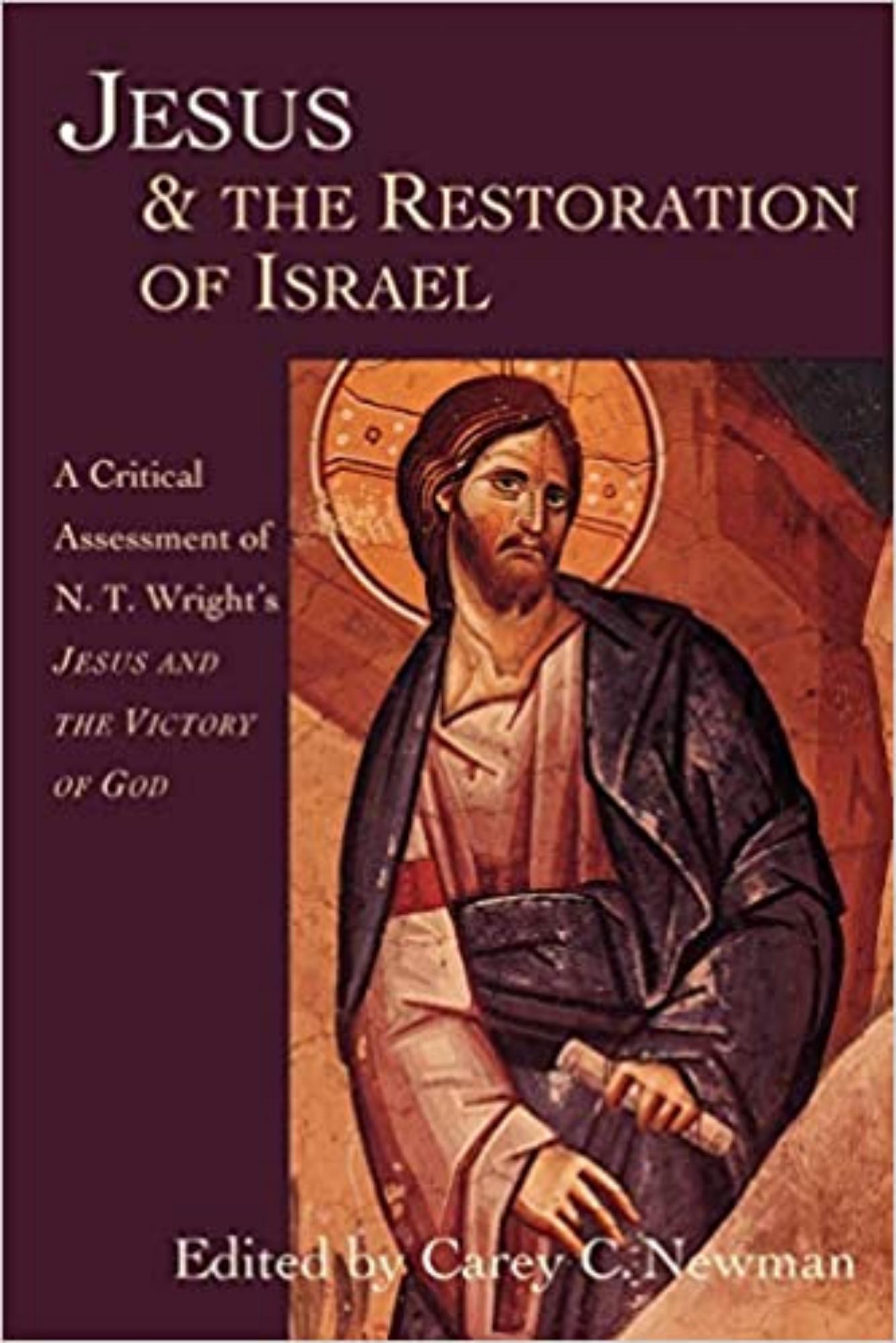
This book, edited by Carey C. Newman, offers a multifaceted and critical assessment of N. T. Wright's work, Jesus and the Victory of God. Wright responds to the essayists, and Marcus Borg offers his critical appraisal.
320 pages
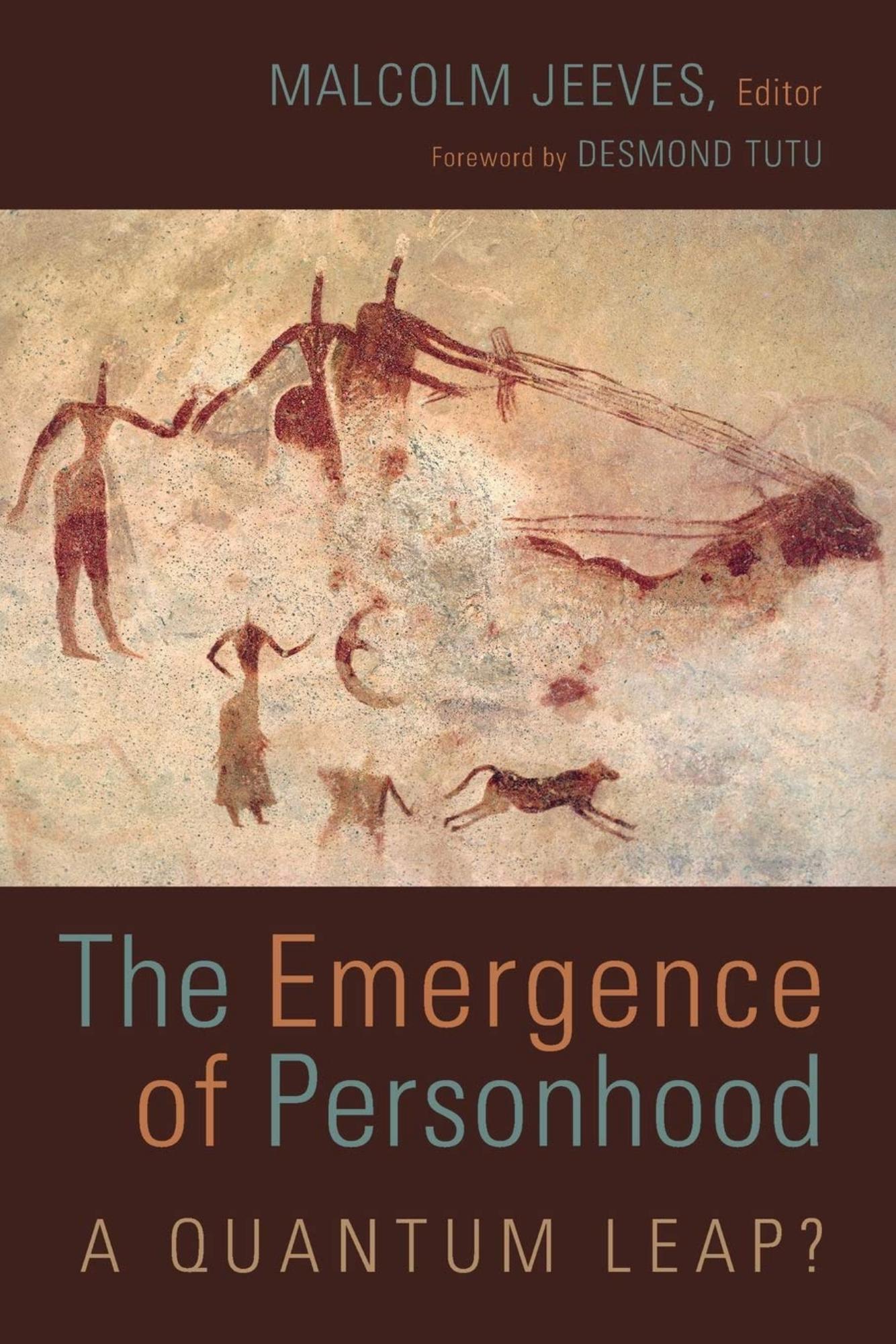
Despite the many well-documented similarities ? genetic, cognitive, behavioral, social ? between our human selves and our evolutionary forebears, a significant gulf remains between us and them. Why is that? How did it come about? And how did we come to be the way we are?
In this book fourteen distinguished scholars ? including humanist, atheist, and theist voices ? address such questions as they explore how and when human personhood emerged. Representing various disciplines, the contributors all offer significant insights into new scientific research about the origins of human nature ? research that challenges some traditional views.
CONTRIBUTORS
Francisco J. Ayala
Justin L. Barrett
Roy F. Baumeister
Warren S. Brown
Richard W. Byrne
Matthew J. Jarvinen
Malcolm Jeeves
Timothy O’Connor
Lynn K. Paul
Colin Renfrew
Ian Tattersall
Anthony C. Thiselton
Alan J. Torrance
Adam Zeman
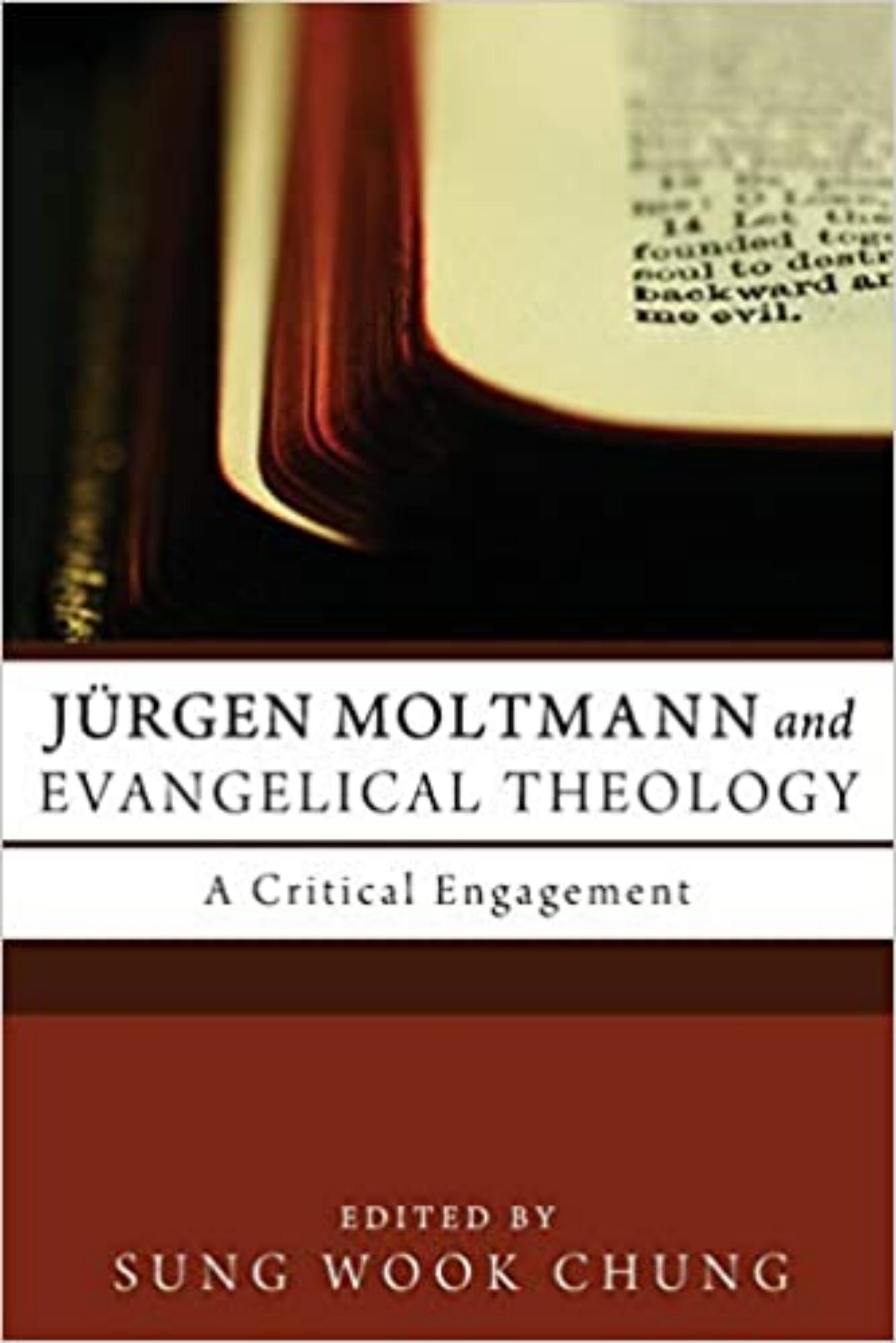
Jürgen Moltmann is now regarded as one of the most influential theologians since Karl Barth. However, evangelical engagement with Moltmann has been hesitant and deficient. This book fills the gap. Ten respected evangelical theologians engage with Moltmann's theology in a mature, dynamic, and critical manner, seeking to appropriate from it in a discerning manner. The contributors include Sung Wook Chung, Kurt Anders Richardson, Veli-Matti Kärkäinen, Stephen N. Williams, and Timothy Bradshaw. This book is an excellent demonstration of intellectual confidence and respectability of robust evangelical theology.
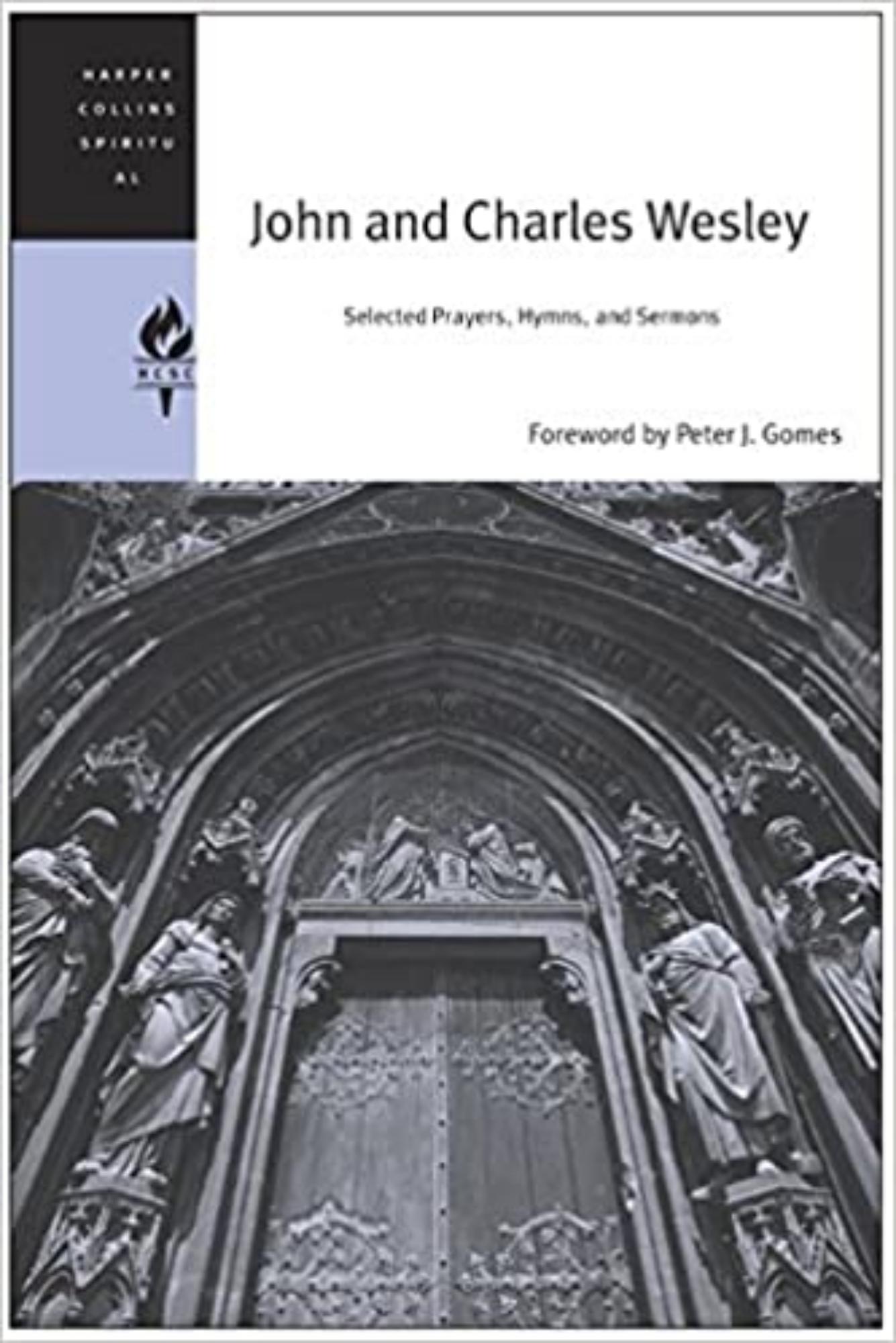
John and Charles Wesley led the Methodist revival that swept eighteenth–century England and America and changed the face of Christianity forever. Their spirituality synthesized a unique blend of elements from the church fathers, Catholic mystics, and Protestant Reformers. This selection includes John's incisive writings on the spiritual life as well as the famous hymns of Charles, giving vibrant expression to the faith of the Wesleys.
"About a quarter before nine, while he was describing the change which God works in the heart through faith in Christ, I felt my heart strangely warmed. I felt I did trust in Christ, Christ alone for salvation; and an assurance was given me that he had taken away my sins, even mine, and saved me from the law of sin and death." –– John Wesley
In this provocative new contribution to public theology, world-renowned theologian Miroslav Volf (named "America's New Public Intellectual" by Scot McKnight on his Jesus Creed blog) and Matthew Croasmun explain that the intellectual tools needed to rescue us from our present malaise and meet our new cultural challenge are the tools of theology. A renewal of theology is crucial to help us articulate compelling visions of the good life, find our way through the maze of contested questions of value, and answer the fundamental question of what makes life worth living.
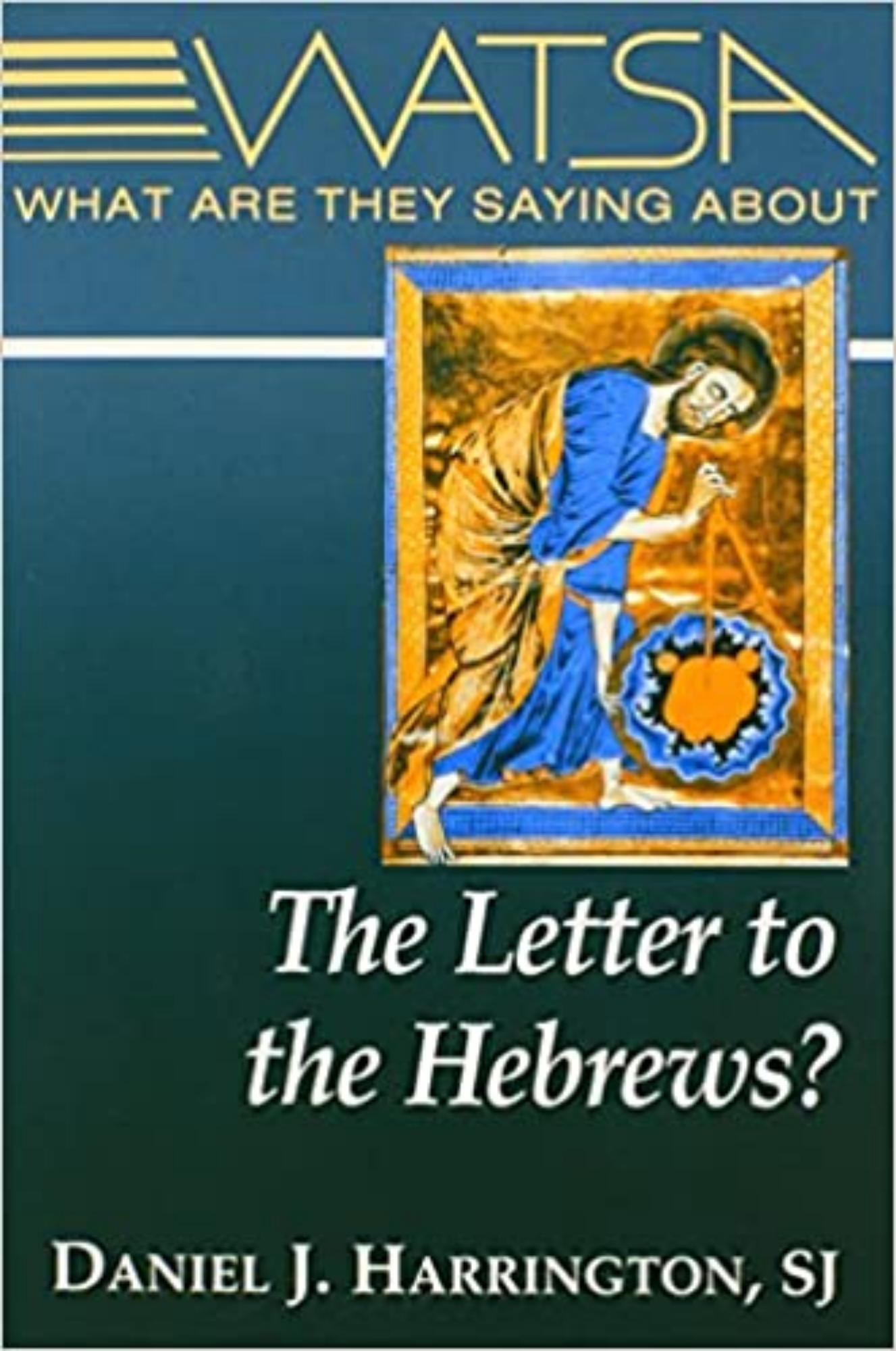
Arguably the greatest Christian sermon ever written, yet one of the more neglected and difficult writings in the New Testament, the Letter to the Hebrews is, says the author,"a long reflection on Jesus as the definitive means of access to God."
This book surveys recent scholarship about Hebrews and the progress made in that scholarship, and informs prospective students and theologians of resources available to them.
Biblical scholars, theologians, students, and pastors will find this work to be stimulating and enriching on the biblical, theological, and pastoral levels.
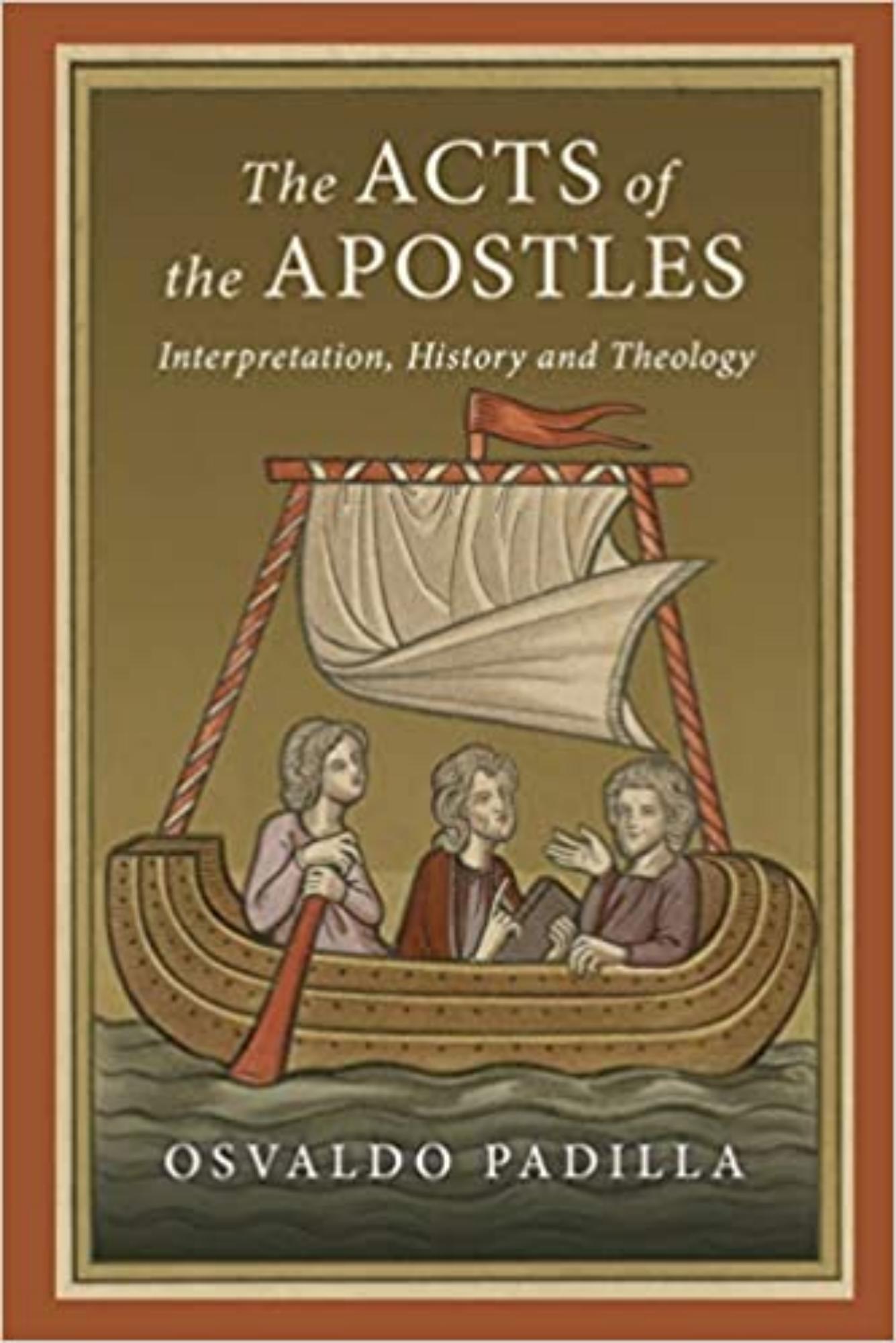
Padilla successfully bridges two worlds, past and present. Relying upon in-depth Greco-Roman knowledge, he recreates the historical setting of Acts. Fluent in recent scholarly trends, he offers a fresh reading of Acts. The insights that result benefit both scholar and practitioner. Overviews of narrative criticism, genre theory, ancient history-writing, and postliberalism, for example, can inspire further study and therefore affect a lecture already delivered or yet-to-be-prepared. An abundance of hermeneutical helps can aid sermon-building. Padilla's 'high view of Scripture' undergirds this book.
--Ivan Parke, Journal for Baptist Theology and Ministry, Spring 2017, 14(1)
The book proves to be well-researched and engaging.
--Abram Kielsmeier-Jones, Bible Study Magazine, September/October 2016
264 pages
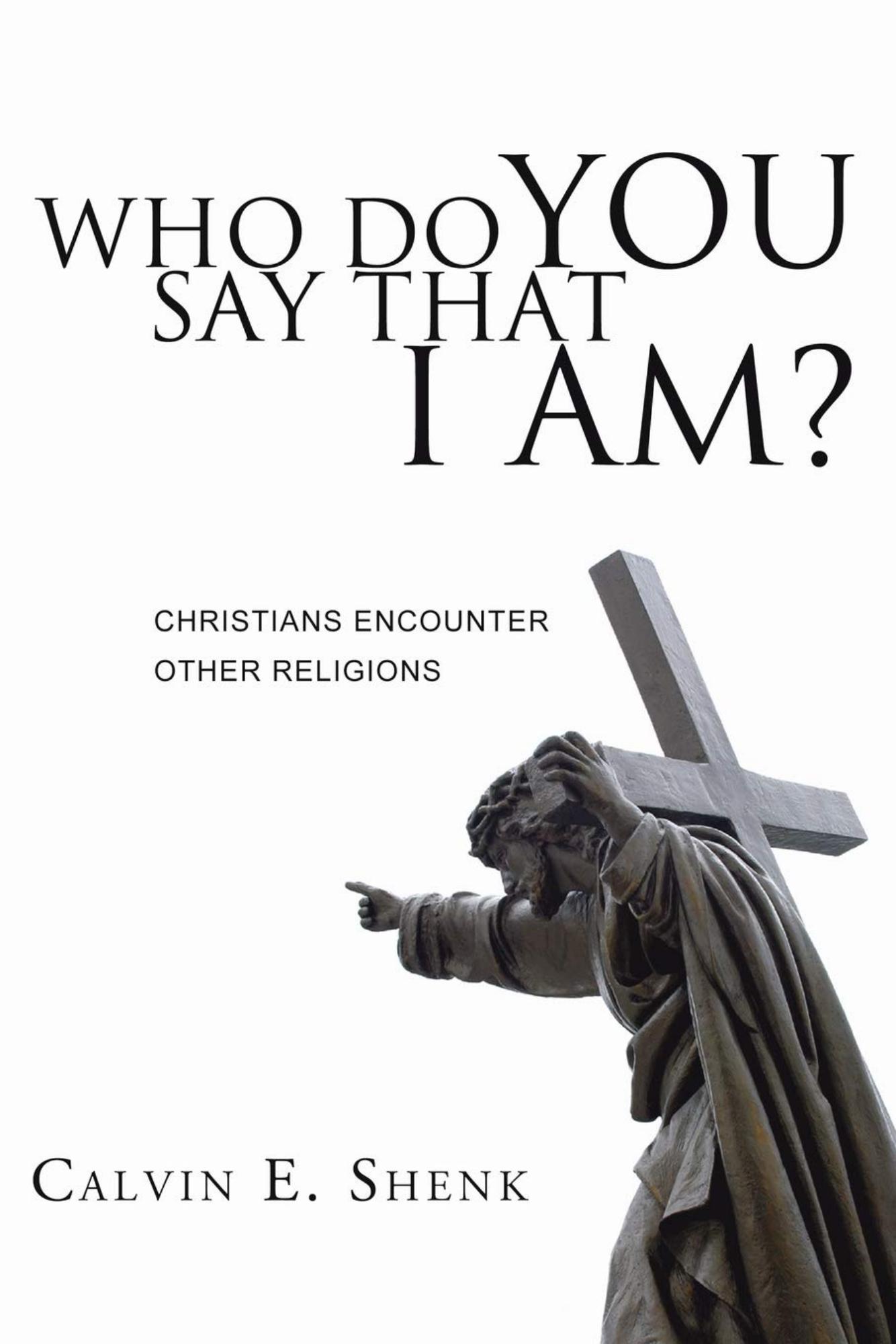
Out of long involvement with adherents of many religions, Shenk dares to assert that one can be profoundly respectful of people of other faith traditions and still retain the integrity of one's own faith. - from the Foreword by Wilbert R. Shenk Can we respect other religions and still view Christ as normative for all? Yes, says Calvin Shenk, Professor Emeritus of Religion at Eastern Mennonite University. How? Answers are not simple. However, biblical perspectives on religions provide reliable starting points for the journey. And placing Christ at the center of the quest yields clarity amid complexity. For Christians, candid commitment to the uniqueness of Christ is to be accomplished by the integrity of Christ. This leads to loving witness that includes truly dialoguing with persons committed to other religions. 'Who Do You Say That I Am' assesses contemporary theologies of religious pluralism as well as several of the world's major religions, yet remains accessible to all thoughtful Christians.
Towards the end of the nineteenth century, there appeared in Central Europe a generation of Jewish intellectuals whose work was to transform modern culture. Drawing at once on the traditions of German Romanticism and Jewish messianism, their thought was organized around the cabalistic idea of the “tikkoun”: redemption. Redemption and Utopia uses the concept of “elective affinity” to explain the surprising community of spirit that existed between redemptive messianic religious thought and the wide variety of radical secular utopian beliefs held by this important group of intellectuals. The author outlines the circumstances that produced this unusual combination of religious and non-religious thought and illuminates the common assumptions that united such seemingly disparate figures as Martin Buber, Franz Kafka, Walter Benjamin and Georg Lukács.
World-renowned Jesus scholar Marcus J. Borg shows how we can live passionately as Christians in today's world by practicing the vital elements of Christian faith. For the millions of people who have turned away from many traditional beliefs about God, Jesus, and the Bible, but still long for a relevant, nourishing faith, Borg shows why the Christian life can remain a transforming relationship with God. Emphasizing the critical role of daily practice in living the Christian life, he explores how prayer, worship, Sabbath, pilgrimage, and more can be experienced as authentically life-giving practices. Borg reclaims terms and ideas once thought to be the sole province of evangelicals and fundamentalists: he shows that terms such as 'born again' have real meaning for all Christians; that the 'Kingdom of God' is not a bulwark against secularism but is a means of transforming society into a world that values justice and love; and that the Christian life is essentially about opening one's heart to God and to others.
The author is a world authority on Orthodox thought. This introduction is written in lively, non-technical language for readers of all religious backgrounds.
194 pages
As a priest and then bishop, Basil of Caesarea devoted sophisticated treatises to the Trinity and to articulating his vision of the Christian life. In his homilies Basil distilled the best of his moral and theological teachings into forms readily accessible to his flock and now to us. During his lifetime, Basil was recognized as one of the foremost rhetoricians of his day a man supremely skilled in the art of speaking, instructing, persuading, and delighting at the same time. These rhetorical skills are on full display in the eleven Moral Homilies translated in this volume, seven of which appear in English for the first time.
324 pages
But what if every Christian discovered that their favorite teacher in church history had blind spots and held to some false--and even shocking--views?
Bestselling author Frank Viola argues that this simple awareness will soften Christians when they interact with each other in the face of theological disagreements. In Regrace, he uncovers some of the shocking beliefs held by faith giants like C.S. Lewis, Luther, Calvin, Moody, Spurgeon, Wesley, Graham, and Augustine--not to downgrade or dismiss them, but to show that even "the greats" in church history didn't get everything right. Knowing that the heroes of our faith sometimes got it wrong will empower us to treat our fellow Christians with grace rather than disdain whenever we disagree over theology
Dietrich Bonhoeffer (1906–1945) has influenced the entire post-World War II era with his life and legacy. Executed in a Nazi concentration camp, he has attained international recognition and fame. His prison experience resulted in writings focused on contemporary and future challenges facing the Christian church. For him, a Christian was called to participate in the suffering of God in the secular life, to be “a person for others.” “Who is Christ for us today?” was his insistent question.
Interest in Bonhoeffer remains at a high peak. This volume by Dallas Roark shows how Bonhoeffer has influenced both conservative and liberal wings of Christianity as well as secularists, and how he remains a source of inspiration for all Christians who suffer under oppressive political regimes.
About the Makers of the Modern Theological Mind series: Who are the thinkers that have shaped Christian theology in our time? This series tries to answer that question by providing a reliable guide to the ideas of the men who have significantly charted the theological seas of our century. Each major theologian is examined carefully and critically--his life, his theological method, his most germinal ideas, his weaknesses as a thinker, his place in the theological spectrum, and his chief contribution to the climate of theology today. Welcome to the series.
"Karen Fields has given us a splendid new translation of the greatest work of sociology ever written, one we will not be embarrassed to assign to our students. In addition she has written a brilliant and profound introduction. The publication of this translation is an occasion for general celebration, for a veritable 'collective effervescence.'
-- Robert N. Bellah Co-author of Habits of the Heart, and editor of Emile Durkheim on Morality and Society
"This superb new translation finally allows non-French speaking American readers fully to appreciate Durkheim's genius. It is a labor of love for which all scholars must be grateful."
--Lewis A. Coser
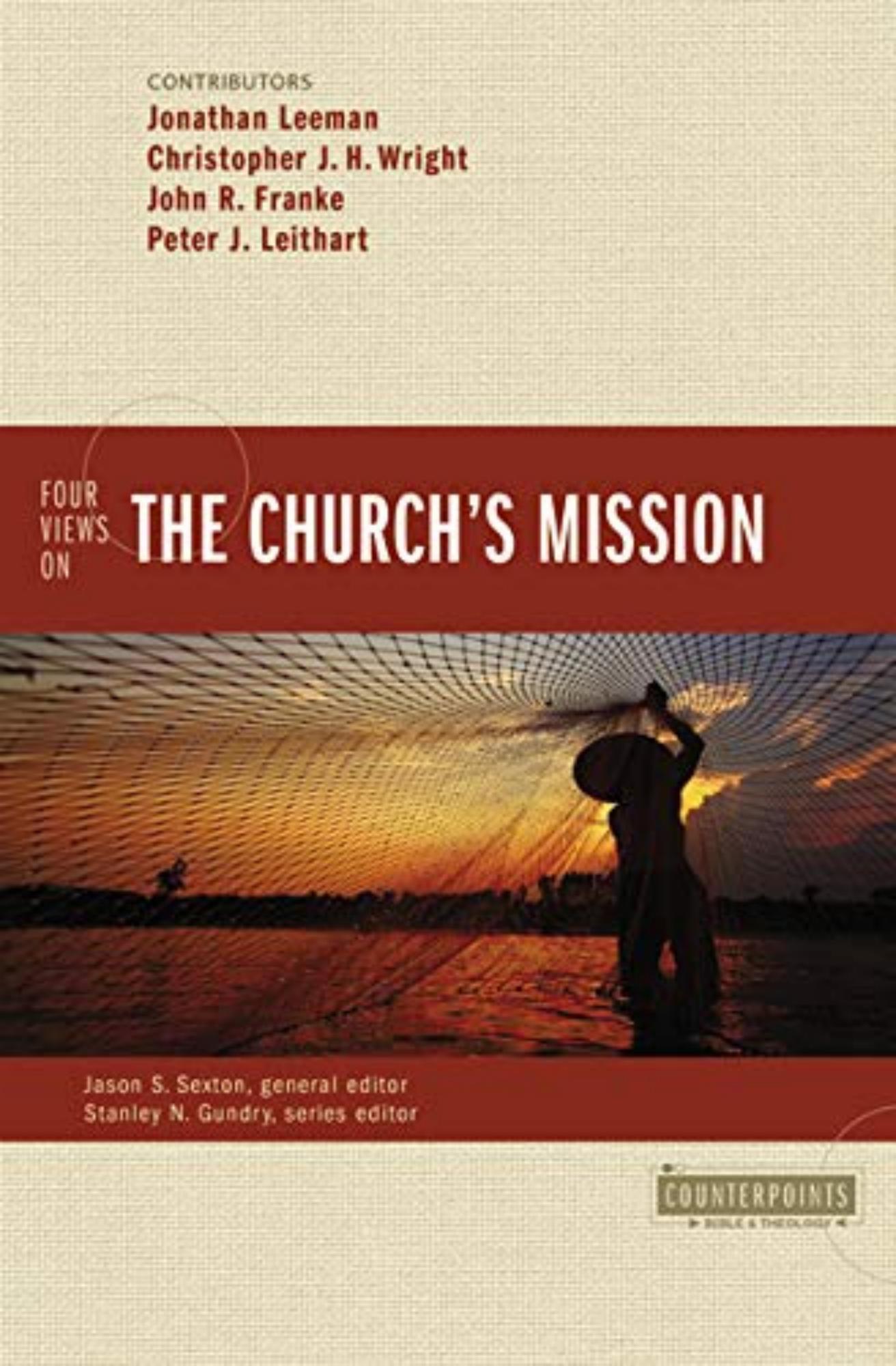
This book articulates various evangelical views regarding the church's mission and provides a healthy, vigorous, and gracious debate on this controversial topic. In a helpful Counterpoints format, this volume demonstrates the unique theological frameworks, doctrinal convictions, and missiological conclusions that inform and distinguish the views:
Soteriological Mission: Jonathan Leeman
Participatory Mission: Christopher Wright
Contextual Mission: John Franke
Ecumenical-Political Mission: Peter Leithart
Each of the four contributors is to answer the same key questions based on their biblical interpretations and theological convictions. What is your biblical-theological framework for mission? How does your definition of mission inform your understanding of the church's mission? How does the Mission of God and Kingdom of God relate to the mission of the church? What is the gospel? How does your view on the gospel inform the mission of the church? How do verbal proclamation of the gospel, discipleship, corporate worship, caring for the poor, social justice, restoring shalom, developing culture, and international missions fit into the church's mission?
The interaction between the contributors will help readers get a clearer picture of where the differences lie and why different conclusions are drawn and provide a fresh starting point for discussion and debate of the church's mission.
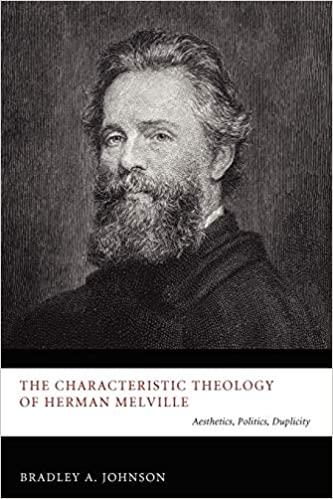
What becomes of theology when we think of it aesthetically? What becomes of aesthetics when we think of it theologically? These are the guiding questions that inform both the method and the conclusions of this volume's exploration into the literary world of Herman Melville's "characteristic theology" Far from a specialist work that simply seeks to flesh out the religious disposition and myriad influences of one particular literary giant, Johnson's focus in this volume is instead the identification of a philosophically robust aesthetic conception of theology at its most politically and contemporarily relevant. By way of the Masquerade it sets in motion and in which it fully participates, from its beginning to its very end, this book uses Melville's fiction as vehicle for a radical aesthetic engagement with the theological bases of subjectivity and sovereignty. Through this exploration Johnson conceives the creatively duplicitous character of a materialistic theology whose aim is nothing less than the fashioning of a new heaven and a new earth.
180 pages
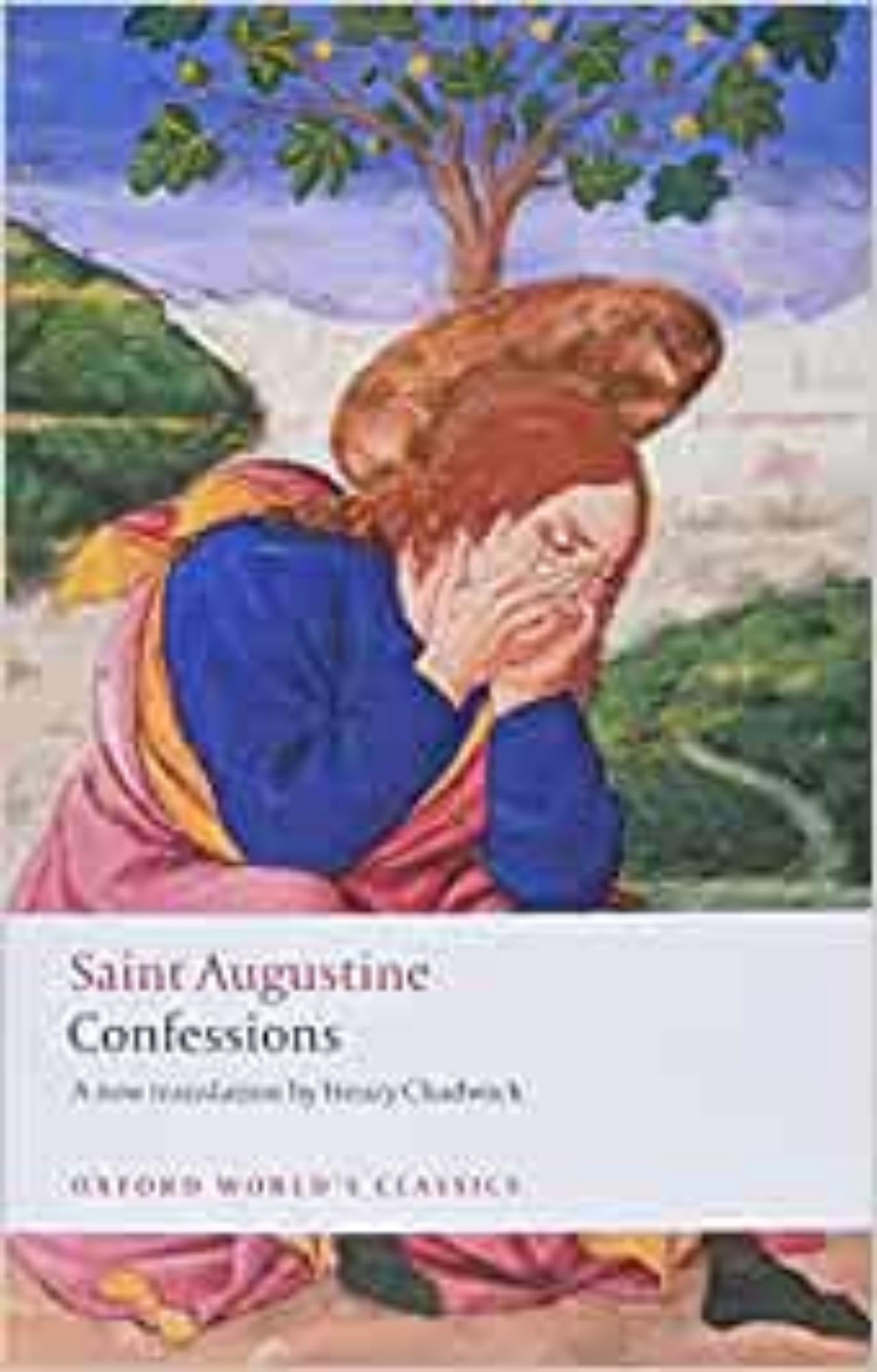
In his own day the dominant personality of the Western Church, Augustine of Hippo today stands as perhaps the greatest thinker of Christian antiquity, and his Confessions is one of the great works of Western literature. In this intensely personal narrative, Augustine relates his rare ascent from a humble Algerian farm to the edge of the corridors of power at the imperial court in Milan, his struggle against the domination of his sexual nature, his renunciation of secular ambition and marriage, and the recovery of the faith his mother Monica had taught him during his childhood.
Now, Henry Chadwick, an eminent scholar of early Christianity, has given us the first new English translation in thirty years of this classic spiritual journey. Chadwick renders the details of Augustine's conversion in clear, modern English. We witness the future saint's fascination with astrology and with the Manichees, and then follow him through scepticism and disillusion with pagan myths until he finally reaches Christian faith. There are brilliant philosophical musings about Platonism and the nature of God, and touching portraits of Augustine's beloved mother, of St. Ambrose of Milan, and of other early Christians like Victorinus, who gave up a distinguished career as a rhetorician to adopt the orthodox faith. Augustine's concerns are often strikingly contemporary, yet his work contains many references and allusions that are easily understood only with background information about the ancient social and intellectual setting. To make The Confessions accessible to contemporary readers, Chadwick provides the most complete and informative notes of any recent translation, and includes an introduction to establish the context.
The religious and philosophical value of The Confessions is unquestionable--now modern readers will have easier access to St. Augustine's deeply personal meditations. Chadwick's lucid translation and helpful introduction clear the way for a new experience of this classic.
About the Series: For over 100 years Oxford World's Classics has made available the broadest spectrum of literature from around the globe. Each affordable volume reflects Oxford's commitment to scholarship, providing the most accurate text plus a wealth of other valuable features, including expert introductions by leading authorities, voluminous notes to clarify the text, up-to-date bibliographies for further study, and much more.
352 pages
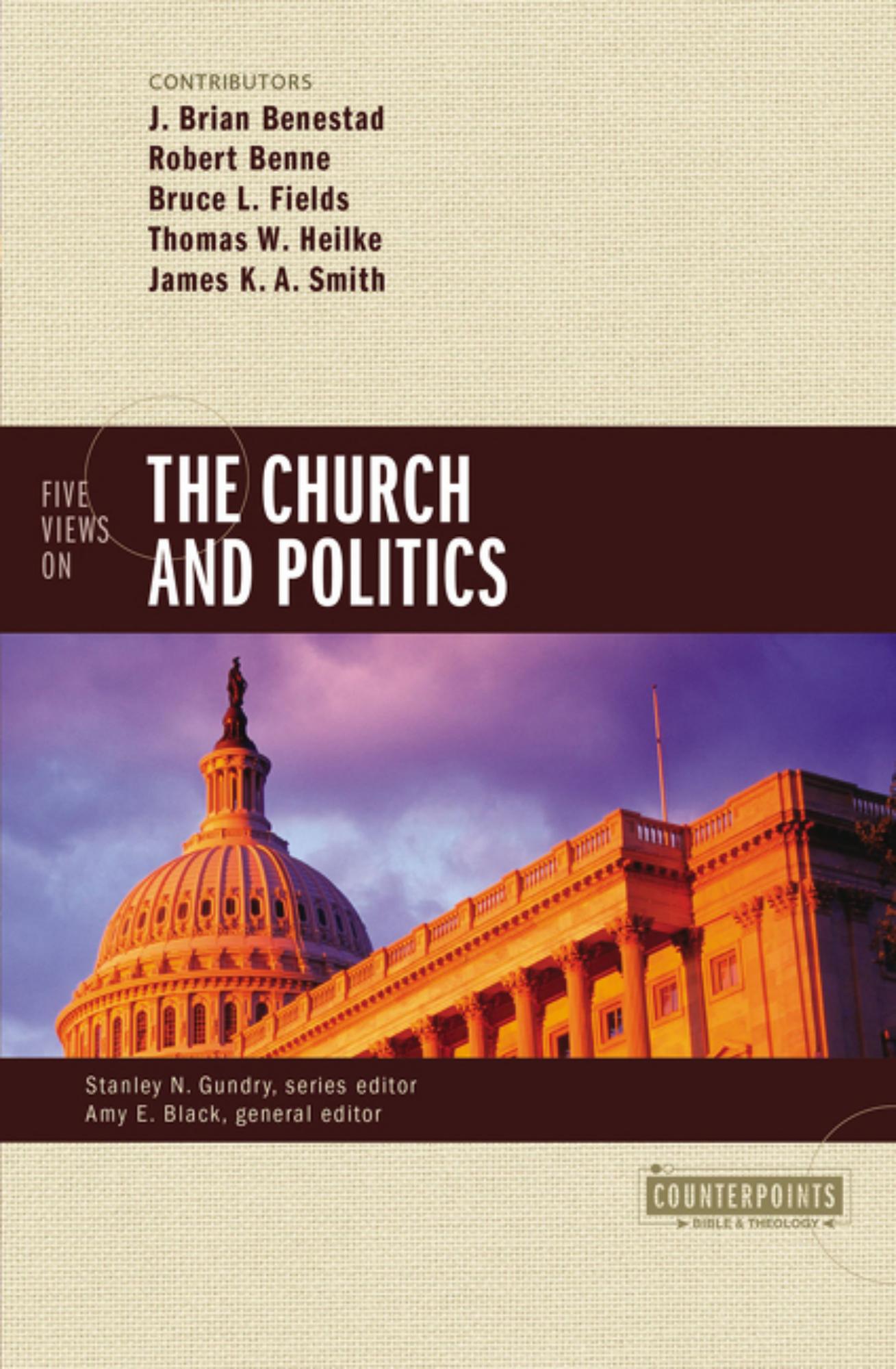
Learn to think deeply about the relationship between church and state in a way that goes beyond mere policy debates and current campaigns.
Few topics can grab headlines and stir passions quite like politics, especially when the church is involved. Considering the attention that many Christian parachurch groups, churches, and individual believers give to politics--and of the varying and sometimes divergent political ideals and aims among them--Five Views on the Church and Politics provides a helpful breakdown of the possible Christian approaches to political involvement.
General Editor Amy Black brings together five top-notch political theologians in the book, each representing one of the five key political traditions within Christianity:
Anabaptist (Separationist: the most limited possible Christian involvement in politics) - represented by Thomas Heilke
Lutheran (Paradoxical: strong separation of church and state) – represented by Robert Benne
Black Church (Prophetic: the church's mission is to be a voice for communal reform) – represented by Bruce Fields
Reformed (Transformationist: emphasizes God's sovereignty over all things, including churches and governments) – represented by James K. A. Smith
Catholic (Synthetic: encouragement of political participation as a means to further the common good of all people) – represented by J. Brian Benestad
Each author addresses his tradition's theological distinctives, the role of government, the place of individual Christian participation in government and politics, and how churches should (or should not) address political questions. Responses by each contributor to opposing views will highlight key areas of difference and disagreement.
Thorough and even-handed, Five Views on the Church and Politics will enable readers to consider the strengths and weaknesses of the most significant Christian views on political engagement and to draw their own, informed conclusions.
240 pages
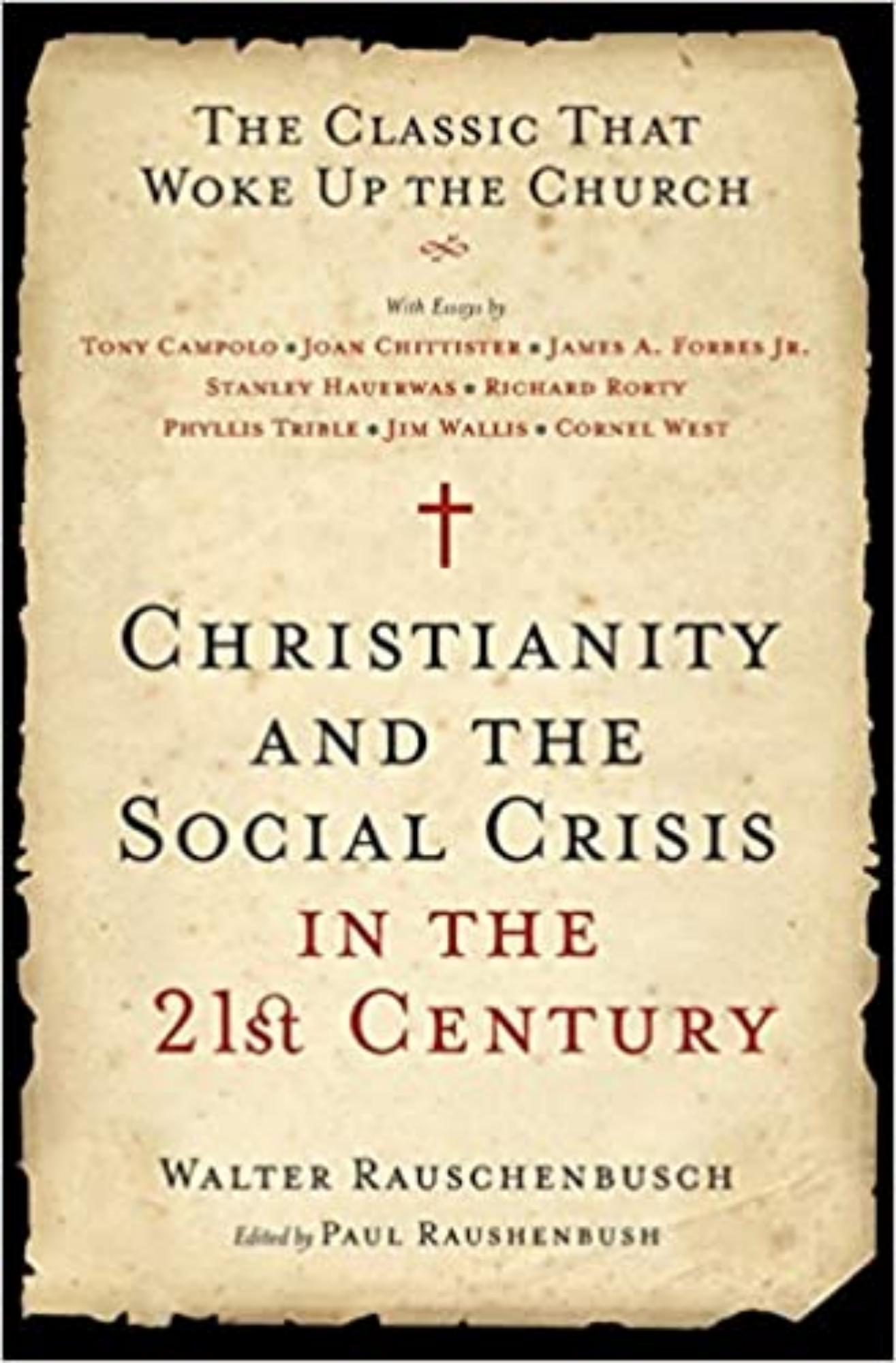
The 100th Anniversary Edition of the Classic That Changed the American Church Forever
Published at the beginning of the twentieth century, Christianity and the Social Crisis is the epoch-making book that dramatically expanded the church’s vision of how it could transform the world. The 100th anniversary edition updates this classic with new essays by leading preachers and theologians.
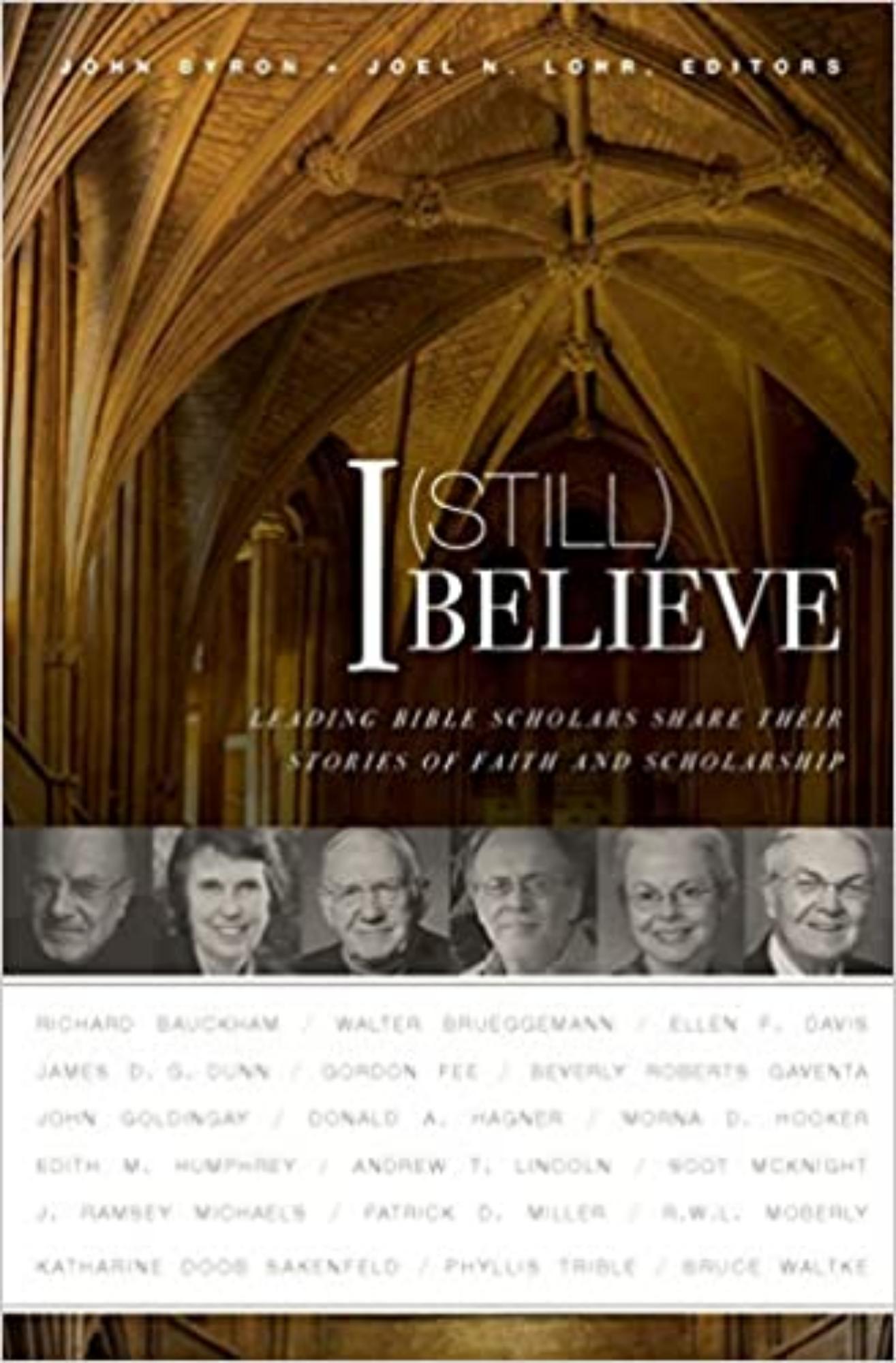
I (Still) Believe explores the all-important question of whether serious academic study of the Bible is threatening to one’s faith. Far from it—faith enhances study of the Bible and, reciprocally, such study enriches a person’s faith. With this in mind, this book asks prominent Bible teachers and scholars to tell their story reflecting on their own experiences at the intersection of faith and serious academic study of the Bible.
While the essays of this book will provide some apology for academic study of the Bible as an important discipline, the essays engage with this question in ways that are uncontrived. They present real stories, with all the complexities and struggles they may hold. To this end, the contributors do two things: (a) reflect on their lives as someone who teaches and researches the Bible, providing something of a story outlining their journey of life and faith, and their self-understanding as a biblical theologian; and (b) provide focused reflections on how faith has made a difference, how it has changed, and what challenges have arisen, remained, and are unresolved, all with a view toward the future and engaging the book’s main question.
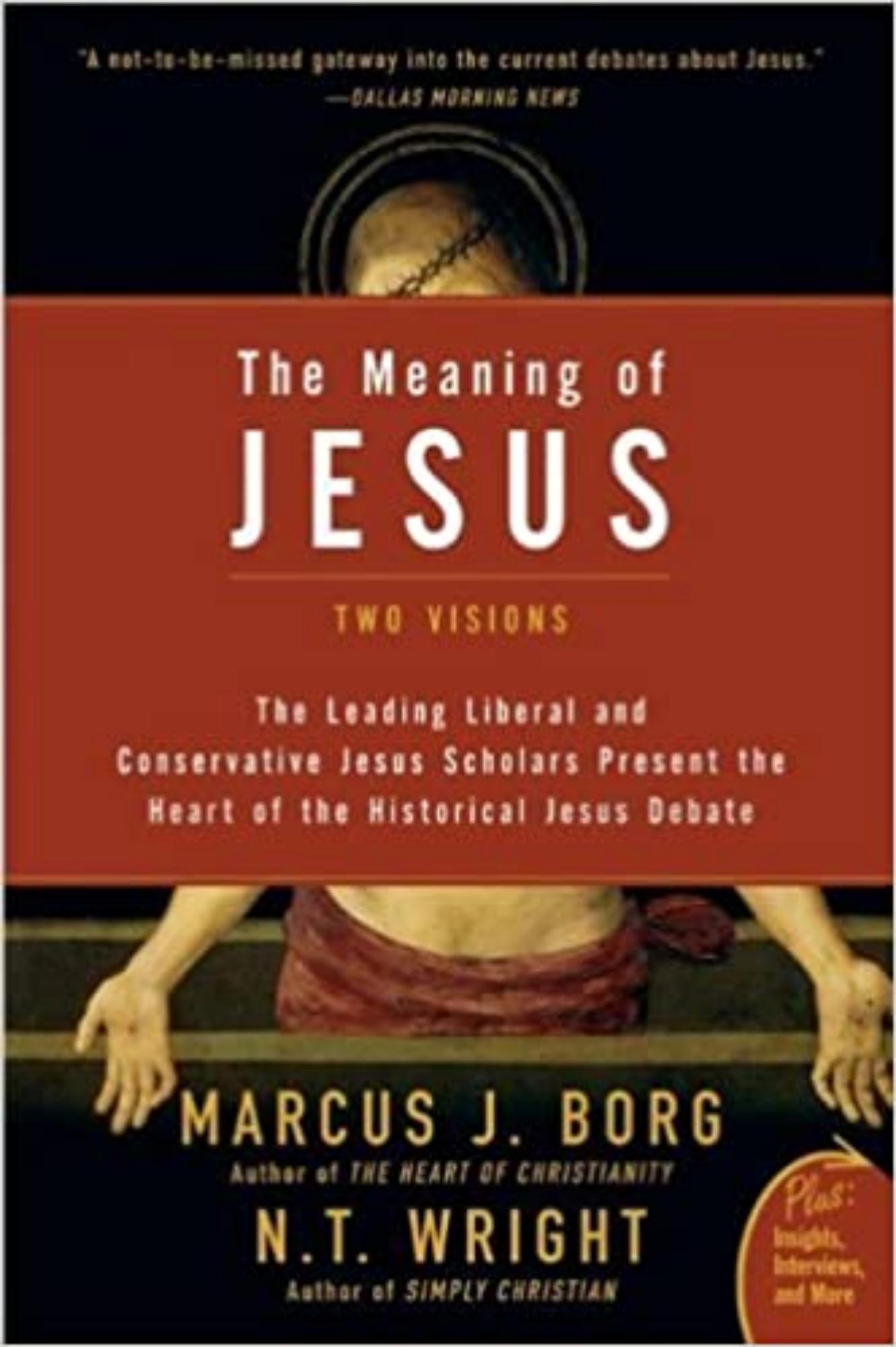
Was Jesus born of a virgin? Did he know he was the Messiah? Was he bodily resurrected from the dead? Did he intentionally die to redeem humankind? Was Jesus God? Two leading Jesus scholars with widely divergent views go right to the heart of these questions and others, presenting the opposing visions of Jesus that shape our faith today.
305 pages
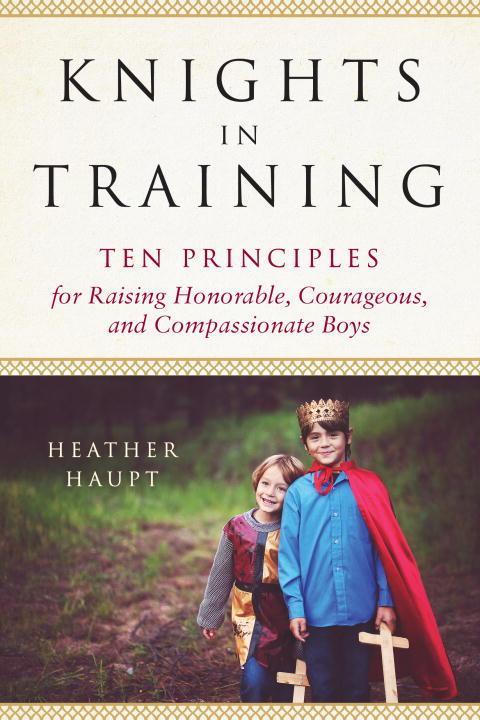
In an age when respect and honor seem like distant and antiquated relics, how can we equip boys to pursue valor and courageously put the needs of others before their own? This book helps parents to inspire their boys by captivating their imagination and honoring their love for adventure. Heather Haupt explores how knights historically lived out various aspects of the knights' Code of Chivalry, as depicted in the French epic Song of Roland, and how boys can embody these same ideals now. When we issue the challenge and give boys the reasons why it is worth pursuing, we step forward on an incredible journey towards raising the kind of boys who, just like the knights of old, make an impact in their world now and for the rest of their lives.
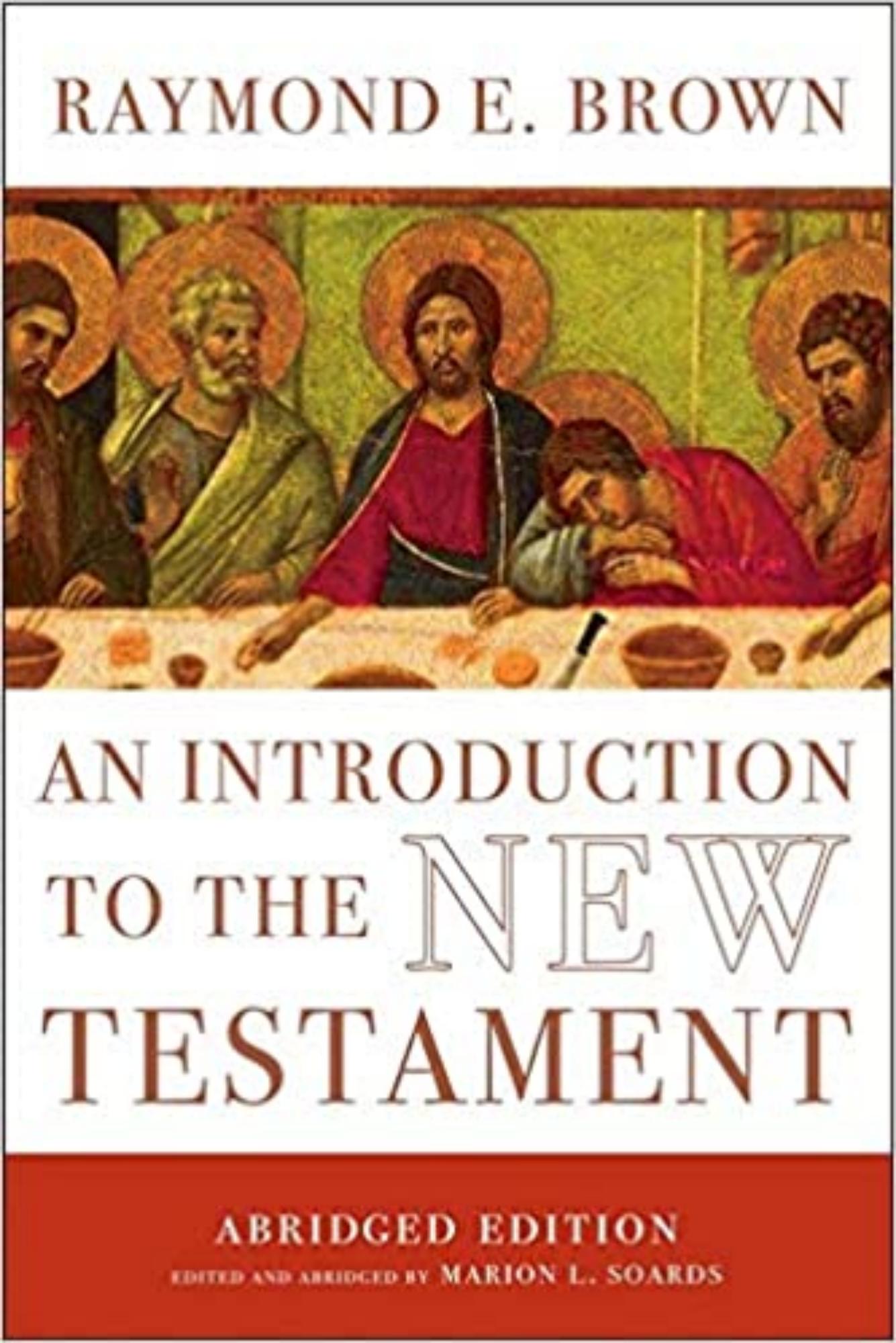
A long-awaited abridgement of Raymond Brown’s classic and best-selling introduction to the New Testament
Since its publication in 1997, Raymond Brown’s Introduction to the New Testament has been widely embraced by modern readers seeking to understand the Christian Bible. Acknowledged as a paragon of New Testament studies in his lifetime, Brown was a gifted communicator who wrote with ease and clarity.
Abridged by Marion Soards, who worked with Brown on the original text, this new, concise version maintains the essence and centrist interpretation of the original without tampering with Brown’s perspective, insights, or conclusions. The biblical writings themselves remain the focus, but there are also chapters dealing with the nature, origin, and interpretation of the New Testament texts, as well as chapters concerning the political, social, religious, and philosophical world of antiquity. Furthermore, augmenting Brown’s commentary on the New Testament itself are topics such as the Gospels’ relationship to one another; the form and function of ancient letters; Paul’s thought and life, along with his motivation, legacy, and theology; a reflection on the historical Jesus; and a survey of relevant Jewish and Christian writings.
This comprehensive, reliable, and authoritative guidebook is now more accessible for novices, general readers, Bible study groups, ministers, scholars, and students alike.
This collection of essays is a sequel to the editors' 1976 volume Studies in Nietzsche and the Classical Tradition. Philosophers, theologians, and literary historians discuss important aspects of Nietzsche''s attack on Judaism and Christianity. The book contains studies of his view of biblical figures, Luther and Pascal as well as comparisons of his thought with that of Spinoza, Lessing, Heine, and Kierkegaard. Nietzsche''s critique of the Old Testament, the Jewish religion of the diaspora, and historical Christianity are also investigated. Of the eighteen articles included here, thirteen were prepared expressly for this volume--five were translated from German, one from French, and one from Hebrew.
Contributors to this volume are: Eugen Biser, Harry Neumann, Israel Eldad, Charles Lewis, Jorg Salaquarda, Joan Stambaugh, Max L. Baeumer, Brendan Donellan, Diana Behler, Sander L. Gilman, Gerd-Gunther Grau, Josef Simon, James C. O''Flaherty, Bernd Magnus, Georges Goedert, Hans Lung, and Karl Barth.
The course reader for Fr. Andrew Younan's Metaphysics and Natural Theology Course at John Paul the Great Catholic University.
464 pages
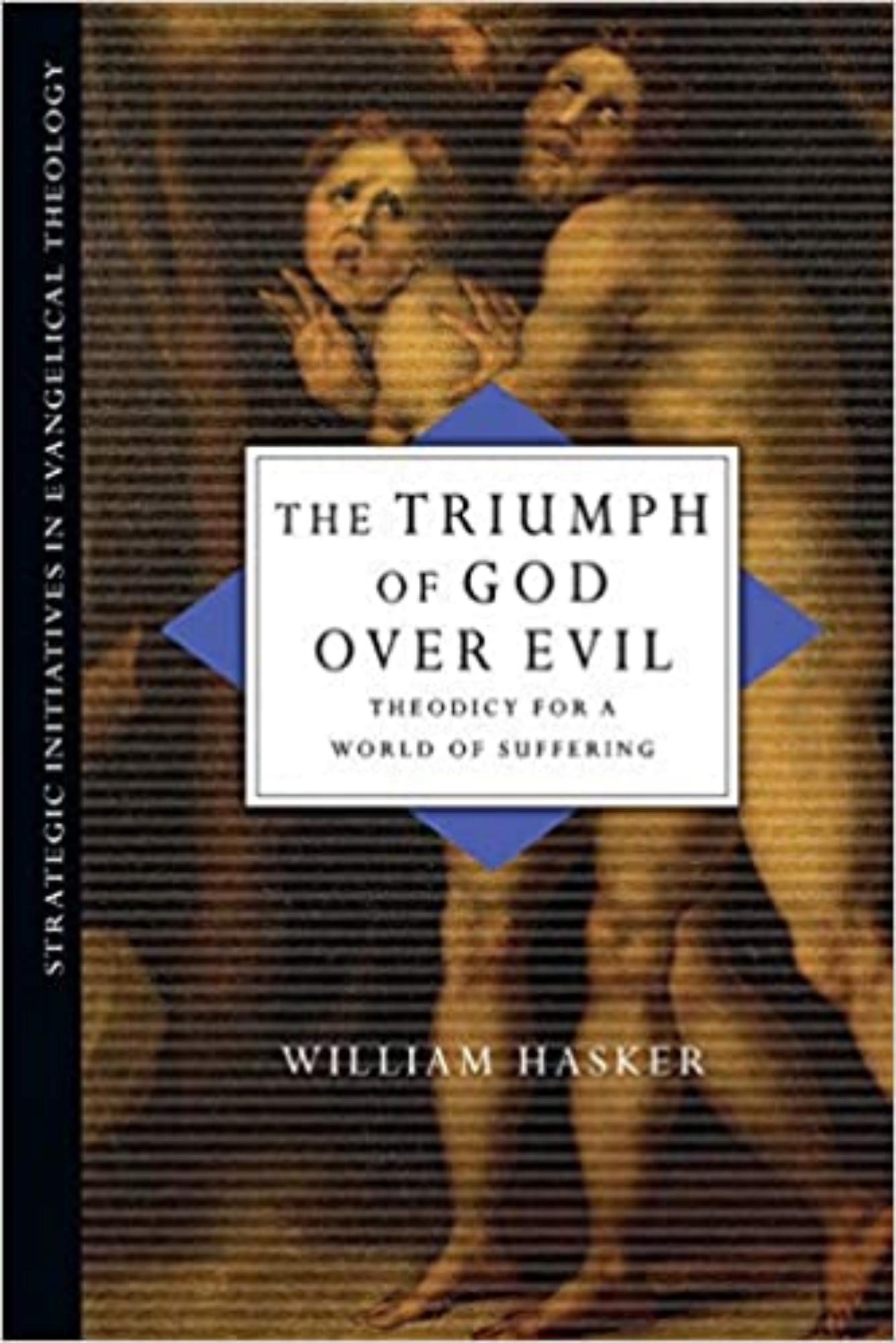
Noted philosopher William Hasker explores a full range of issues concerning the problem of evil. Having taken account of the current state of the discussion and squarely facing some of the most trenchant arguments marshaled by John K. Roth and D. Z. Phillips, Hasker forges a constructive answer in some depth showing why the evil in the world does not provide evidence of a moral fault in God, the world's creator and governor. A fresh and provocative contribution to the ongoing discussion of theodicy.
240 pages
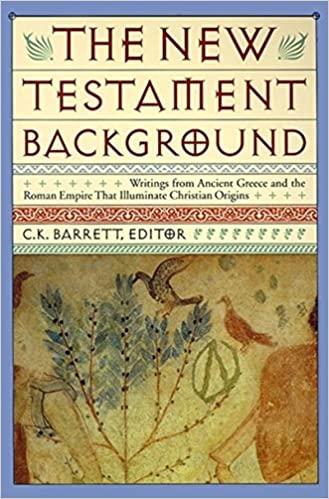
C.K. Barret's classic work presents 280 ancient writings that bring the spiritual world of first century vividly to life.
400 pages
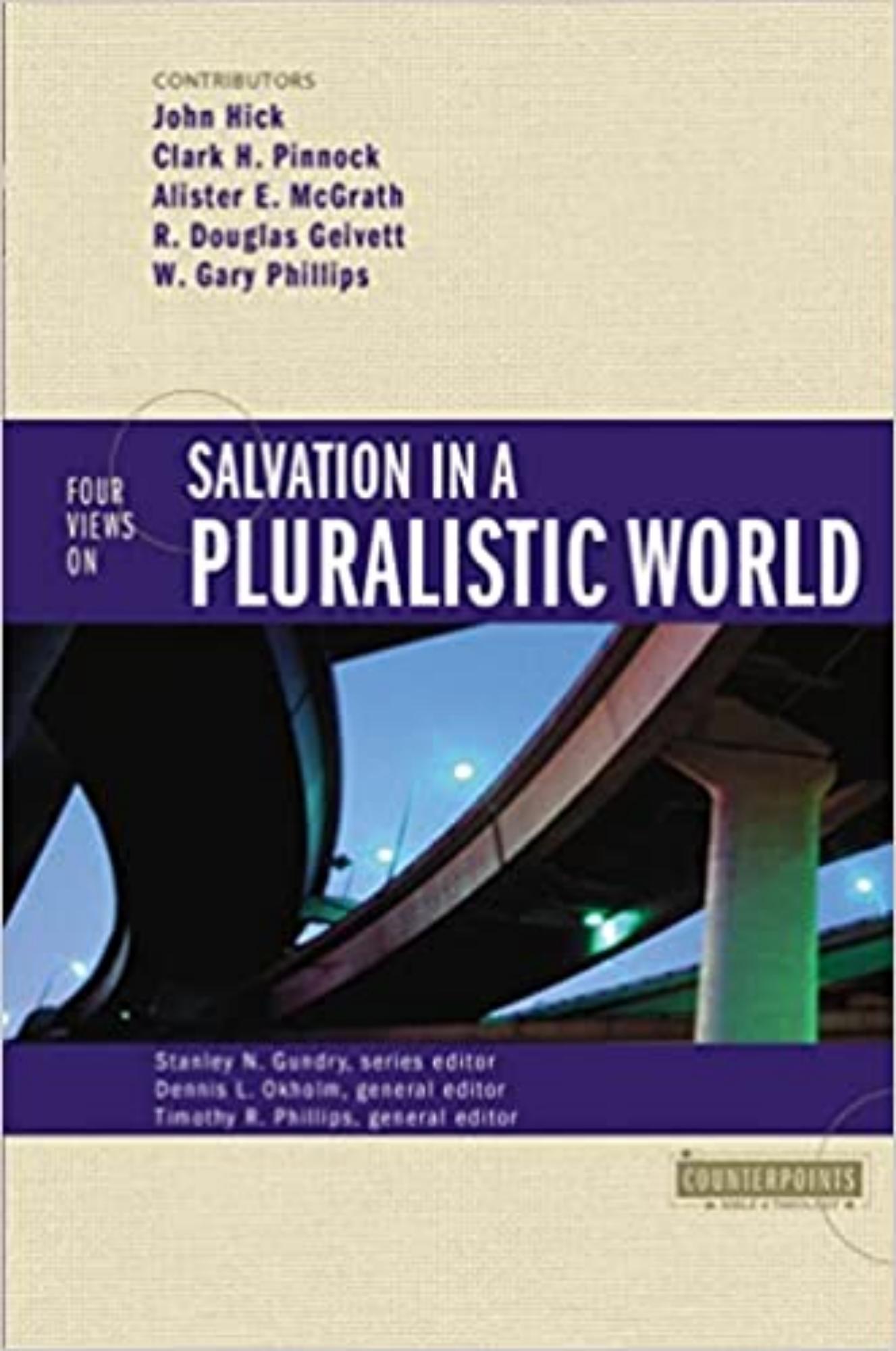
Religious pluralism is the greatest challenge facing Christianity in today's Western culture. The belief that Christ is the only way to God is being challenged, and increasingly Christianity is seen as just one among many valid paths to God.
In Four Views on Salvation in a Pluralistic World, four perspectives are presented by their major proponents:
Normative Pluralism: All ethical religions lead to God (John Hick)
Inclusivism: Salvation is universally available, but is established by and leads to Christ (Clark Pinnock)
Salvation in Christ: Agnosticism regarding those who haven't heard the gospel (Alister McGrath)
Salvation in Christ Alone: Salvation depends on explicit personal faith in Jesus Christ alone (R. Douglas Geivett and W. Gary Phillips)
This book allows each contributor to not only present the case for his view, but also to critique and respond to the critiques of the other contributors.
The Counterpoints series presents a comparison and critique of scholarly views on topics important to Christians that are both fair-minded and respectful of the biblical text. Each volume is a one-stop reference that allows readers to evaluate the different positions on a specific issue and form their own, educated opinion.
288 pages
Twenty four articles and summary statement of Mennonite faith for teaching and nurturing life in the church.
112 pages
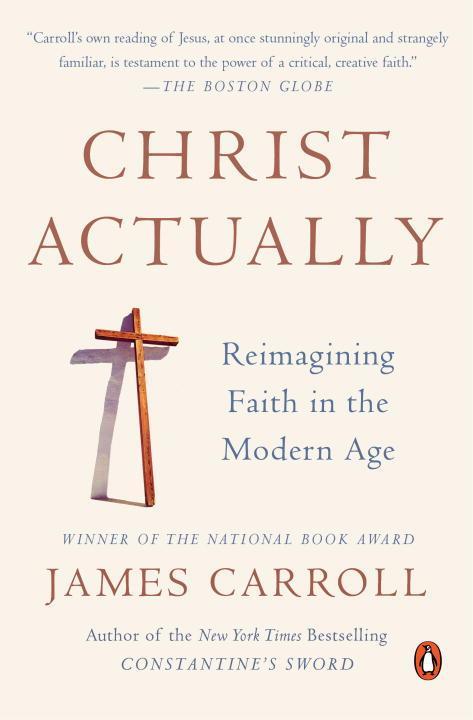
What can we believe about—and how can we believe in—Jesus Christ in light of the Holocaust and other atrocities of the twentieth century and the drift from religion that followed? In this urgent and provocative work, award-winning author James Carroll traces centuries of religious history and theology to face this core challenge to modern faith and to rescue it for the secular age.
Far from another book about the “historical Jesus,” Christ Actually takes the challenges of science and contemporary philosophy, of secularism, seriously. Carroll retrieves the power of Jesus both as an answer to humanity’s perennial longing for transcendence and as a figure of profound ordinariness—his simple life, and his call to imitate him, all suggest an answer to the question “What is the future of Jesus Christ?” This book points the way.
The heart of Christianity is trinitarian.
The subject matter of Trinitarian Theology casts a long shadow over our faith. The relationship between the Father, the Son, and the Spirit is central to the salvation story. The Trinity is central to Christianity, for the vibrancy of our churches, and for the clarity of our witness in the world. In Trinitarian Theology, Bruce Ware, Malcon B. Yarnell III, Matthew Y. Emerson, and Luke Stamps discuss issues such as the eternal functional subordination of the Son, the nature of the God-human relationship, and theological methods for forming the doctrine of the Trinity. This is a discussion of great importance, offered by scholars who represent varying views held by today’s Southern Baptist scholars.
208 pages
No issue is more divisive or more pressing for the church today than homosexuality. Two Views on Homosexuality, the Bible, and the Church brings a fresh perspective to a well-worn debate. While Christian debates about homosexuality are most often dominated by biblical exegesis, this book seeks to give much-needed attention to the rich history of received Christian tradition, bringing the Bible into conversation with historical and systematic theology. To that end, both theologians and biblical scholars—well accomplished in their fields and conversant in issues of sexuality and gender—articulate and defend each of the two views:
Affirming view
- William Loader
- Megan K. DeFranza
Traditional view
- Wesley Hill
- Stephen R. Holmes
Unique among most debates on homosexuality, this book presents a constructive dialogue between people who disagree on significant ethical and theological matters, and yet maintain a respectful and humanizing posture toward one another. Even as these scholars articulate pointed arguments for their position with academic rigor and depth, they do so cordially, clearly, and compassionately, without demeaning the other.
The main essays are followed by exceptionally insightful responses and rejoinders that interact with their fellow essayists with convicted civility. Holding to a high view of Scripture, a commitment to the gospel and the church, and a love for people—especially those most affected by this topic—the contributors wrestle deeply with the Bible and theology, especially the prohibition texts, the role of procreation, gender complementarity, and pastoral accommodation.
The book concludes with general editor Preston Sprinkle’s reflections on the future of discussions on faith and sexuality.
There have been twenty-one universal gatherings 'ecumenical councils 'of the Catholic Church. The first opened in 325, the last closed in 1965, and the names of many ring out in the history of the church: Nicea, Chalcedon, Trent, Vatican Ii. Though centuries separate the councils, each occurred when the church faced serious crises, sometimes with doctrinal matters, sometimes with moral or even political matters, and sometimes with discerning the church's relation to the world. The councils determined much of what the Catholic Church is and believes. Additionally, many councils impacted believers in other Christian traditions and even in other faiths.In this accessible, readable, and yet substantial account of the councils Joseph Kelly provides both the historical context for each council as well as an account of its proceedings. Readers will discover how the councils shaped the debate for the following decades and even centuries, and will appreciate the occasional portraits of important conciliar figures from Emperor Constantine to Pope John Xxiii.Joseph F. Kelly, PhD, is professor of religious studies at John Carroll University in Cleveland, Ohio. He is author of The Origins of Christmas, An Introduction to the New Testament for Catholics, The Collegeville Church History Timeline, and The Birth of Jesus According to the Gospels, all published by Liturgical Press.
This lucidly written survey of hermeneutics includes a thorough examination of the extent of the contribution of philosophy to the interpretation of the Bible, as well as a detailed original treatment of the work of Heidegger, Bultmann, Gadamer, and Wittgenstein.
Notes; full bibliography; indexes.
This book details how semiotics furthers an understanding of the science of Christology. In the light of the trend towards evolutionary worldview, the book goes beyond description and critically engages the sign system of C. S. Peirce, which it sees as a conceptual tool and method for a better understanding of some of the basic issues in Christology.
In Cafe Theology, Michael invites us to grab a cappuccino and travel with him on a mind-stretching journey form Creation to New Creation, offering a rich and human view of life and Life-Giver. This is a unique journey because Michael has an inimitable gift for mixing insightful theology with unflinching honesty and a fantastic sense of humour, often bordering on a darkish side of grey. Whether we've been on the Christian journey our whole life, we're just starting out, or we haven't even bought a ticket, this distinctive book is applicable to our ordinary lives, longings, and in Michael's words, our 'feeble and frustrated fumbling after an understanding of who we are and what we are for'. This new edition includes a full study guide for each chapter.
Christians generally recognize the need to live a holy, or sanctified, life. But they differ on what sanctification is and how it is achieved.
How does one achieve sanctification in this life? How much success in sanctification is possible? Is a crisis experience following one's conversion normal--or necessary? If so, what kind of experience, and how is it verified?
Five Views on Sanctification--part of the Counterpoints series--brings together in one easy-to-understand volume five major Protestant views on sanctification:
Wesleyan View – represented by Melvin E. Dieter
Reformed View – represented by Anthony A. Hoekema
Pentecostal View – represented by Stanley M. Horton
Keswick View – represented by J. Robertson McQuilkin
Augustinian-Dispensationalism View – represented by John F. Walvoord
Writing from a solid evangelical stance, each author describes and defends his own understanding of the doctrine sanctification and then responds to the views of the other authors.
The Counterpoints series presents a comparison and critique of scholarly views on topics important to Christians that are both fair-minded and respectful of the biblical text. Each volume is a one-stop reference that allows readers to evaluate the different positions on a specific issue and form their own, educated opinion.
256 pages
224 pages
Of the many recent books on the historical Jesus, none has explored what the latest biblical scholarship means for personal faith. Now, in Meeting Jesus Again for the First Time, Marcus Borg addresses the yearnings of those who want a fully contemporary faith that welcomes rather than oppresses our critical intelligence and openness to the best of historical scholarship. Borg shows how a rigorous examination of historical findings can lead to a new faith in Christ, one that is critical and, at the same time, sustaining.
Drawing on his own journey from a naïve, unquestioning belief in Christ through collegiate skepticism to a mature and contemporary Christian faith, Borg illustrates how an understanding of the historical Jesus can actually lead to a more authentic Christian life—one not rooted in creed or dogma, but in a life of spiritual challenge, compassion, and community.
In straightforward, accessible prose, Borg looks at the major findings of modern Jesus scholarship from the perspective of faith, bringing alive the many levels of Jesus's character: spirit person, teacher of alternative wisdom, social prophet, and movement founder. He also reexamines the major stories of the Old Testament vital to an authentic understanding of Jesus, showing how an enriched understanding of these stories can uncover new truths and new pathways to faith.
The Practice of the Body of Christ begins a conversation between "apocalyptic" interpretations of the Apostle Paul and the contemporary revival in "virtue ethics" It argues that the human actor's place in Pauline theology has long been captive to theological concerns foreign to Paul and that we can discern in Paul a classical account of human action that Alasdair MacIntyre's work helps to recover. Such an account of agency helps ground an apocalyptic reading of Paul by recovering the centrality of the church and its day-to-day Christic practices, specifically, but not exclusively, the Eucharist. To demonstrate this Miller first offers a critique of some contemporary accounts of agency in Paul in light of MacIntyre's work. Three exegetical chapters then establish a "MacIntyrian" rereading of central parts of the letter to the Romans. A concluding chapter offers theological syntheses and prospects for future research.
For more than a century, Bible scholars and university researchers have been systematically debunking what ordinary Christians believed about Jesus of Nazareth. But what if the most recent Biblical scholarship actually affirmed the New Testament? What if Jesus was not a Zealot revolutionary, or a Greek Cynic philosopher, or a proto-feminist Gnostic, but precisely what he claimed to be: the divine Son of Man prophesied in the Book of Daniel who gave his life as a ransom for many? What if everything the Gospels say about Jesus of Nazareth—his words, his deeds, his plans—turned out to be true? Searching for Jesus changes “what if?” to “what is,” debunking the debunkers and showing how the latest scholarship supports orthodox Christian belief.
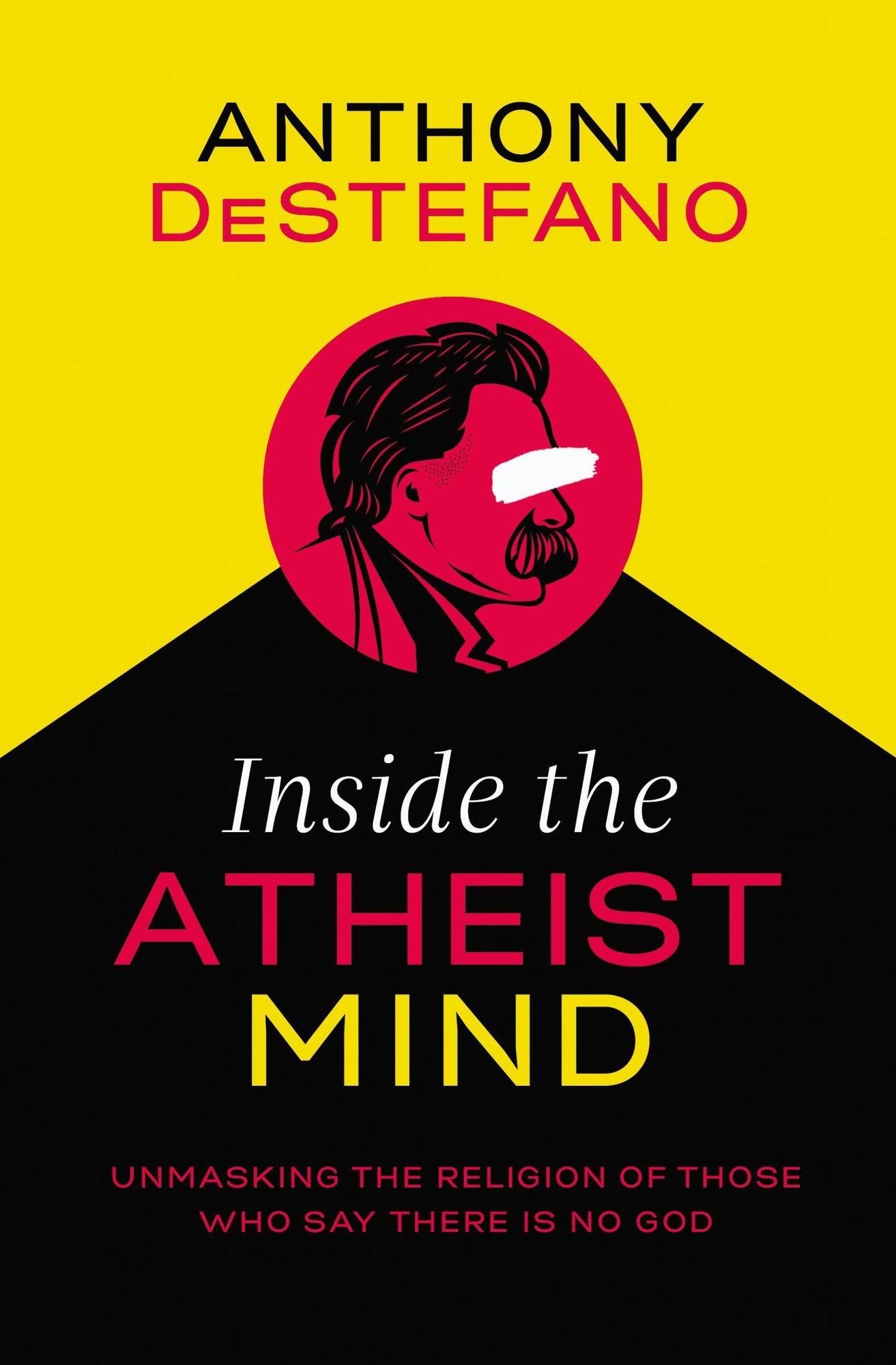
USA Today bestselling author Anthony DeStefano is tired of playing nice. After years of responding patiently and agreeably to the pseudo-intellectual arguments and tactics of today’s militant atheists, he’s had enough. In this entertaining, no-holds-barred retort to atheism and its proponents, DeStefano reveals the intellectual bankruptcy at atheism’s core and equips believers to respond to its hollow arguments.
A witty and devastating takedown of the "new atheist" position, Inside the Atheist Mind systematically debunks the theories of Richard Dawkins, Christopher Hitchens, Sam Harris, and others, revealing how inconsistent, illogical, and frankly ludicrous their conclusions truly are. Poking fun at atheists in a clever and intelligent way, DeStefano demonstrates just how full of holes the new atheism is and reveals that it is actually a "religion" of its own, complete with a creed, a set of commandments and sacraments, and a rigid moral code with rewards and punishments. More than that, DeStefano exposes that atheism is itself a "superstition" of the worst kind.
Using irony and a healthy dose of playful sarcasm, Inside the Atheist Mind lampoons, teases, and deflates the atheist position, unmasking it for what it is--an empty, intellectually barren philosophy, devoid of any logic and common sense.
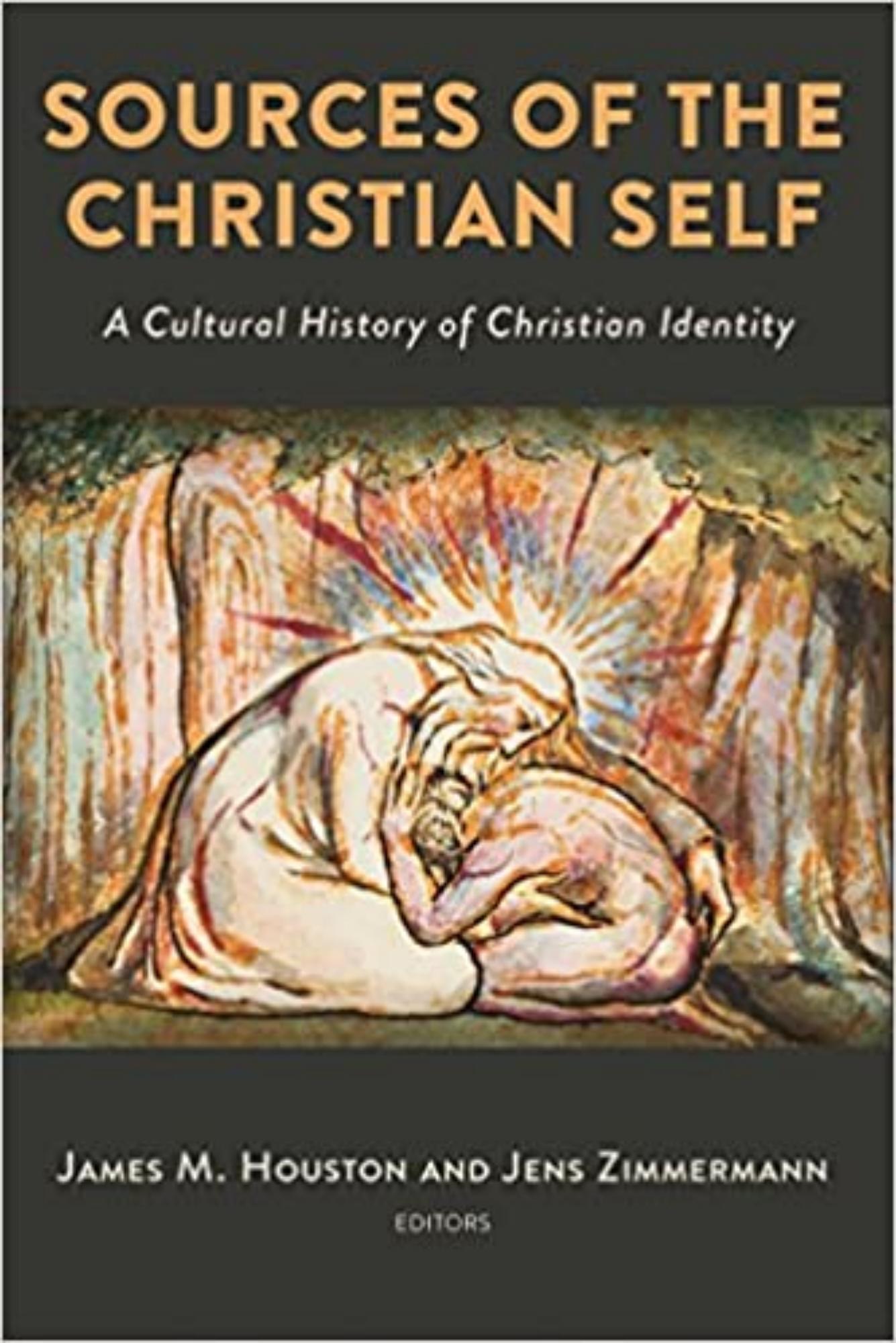
Using Charles Taylor’s magisterial Sources of the Self: The Making of the Modern Identity as a springboard, this interdisciplinary book explores lived Christian identity through the ages.
Beginning with such Old Testament figures as Abraham, Moses, and David and moving through the New Testament, the early church, the Middle Ages, and onward, the forty-two biographical chapters in Sources of the Christian Self illustrate how believers historically have defined their selfhood based on their relation to God/Jesus.
Among the many historical subjects are Justin Martyr, Origen, Augustine, Aquinas, Julian of Norwich, Dante, John Calvin, Teresa of Ávila, John Bunyan, Jonathan Edwards, Christina Rossetti, Blaise Pascal, Søren Kierkegaard, C. S. Lewis, and Flannery O’Connor?all of whom boldly lived out their Christian identities in their varied cultural contexts. In showing how Christian identity has evolved over time, Sources of the Christian Self offers deep insight into our own Christian selves today.
CONTRIBUTORS:
Markus Bockmuehl
Keith Bodner
Gerald P. Boersma
Hans Boersma
Robert H. Bork
Paul C. Burns
Julie Canlis
Victor I. Ezigbo
Craig M. Gay
Yonghua Ge
Christopher Hall
Ross Hastings
Bruce Hindmarsh
James M. Houston
Sharon Jebb Smith
Robert A. Kitchen
Marian Kamell Kovalishyn
Pak-Wah Lai
Jay Langdale
Bo Karen Lee
Jonathan Sing-cheung Li
V. Phillips Long
Howard Louthan
Elizabeth Ludlow
Eleanor McCullough
Stephen Ney
Ryan S. Olson
Steve L. Porter
Iain Provan
Murray Rae
Jonathan Reimer
Ronald T. Rittgers
Sven Soderlund
Janet Martin Soskice
Mikael Tellbe
Colin Thompson
Bruce K. Waltke
Steven Watts
Robyn Wrigley-Carr
Jens Zimmermann
About the Contributor(s): Peter Stuhlmacher, who was born in 1932 in Leipzig, has taught New testament at the Protestant Theological Faculty in Tubingen since 1972. His main interest has long been in problems of hermeneutics and Biblical Theology. Some of his translated works are Historical Criticism and Theological Interpretation of Scripture; Reconciliation, Law & Righteousness; Jesus of Nazareth - Christ of Faith; and Paul's Letter to the Romans.
The Dictionary of New Testament Background joins the Dictionary of Jesus and the Gospels, the Dictionary of Paul and His Letters and the Dictionary of the Later New Testament and Its Developments as the fourth in a landmark series of reference works on the Bible. In a time when our knowledge of the ancient Mediterranean world has grown by leaps and bounds, this volume sets out for readers the wealth of Jewish and Greco-Roman background that should inform our reading and understanding of the New Testament and early Christianity. The Dictionary of New Testament Background takes full advantage of the flourishing study of the Dead Sea Scrolls and offers individual articles focused on the most important scrolls. In addition, the Dictionary encompasses the fullness of second-temple Jewish writings, whether pseudepigraphic, rabbinic, parables, proverbs, histories or inscriptions. Articles abound on aspects of Jewish life and thought, including family, purity, liturgy and messianism. The full scope of Greco-Roman culture is displayed in articles ranging across language and rhetoric, literacy and book culture, religion and cults, honor and shame, patronage and benefactors, travel and trade, intellectual movements and ideas, and ancient geographical perspectives. No other reference work presents so much in one place for students of the New Testament. Here an entire library of scholarship is made available in summary form. The Dictionary of New Testament Background can stand alone or work in concert with one or more of its companion volumes in the series. Written by acknowledged experts in their fields, this wealth of knowledge of the New Testament era is carefully aimed at the needs of contemporary students of the New Testament. And its full bibliographies and cross-references to other volumes in the series will make it the first book to reach for in any investigation of the New Testament in its ancient setting.
The pioneering scholar and author of Food and Faith and Living the Sabbath asserts that Christianity has slid off its rightful foundation, arguing that the faith only makes sense and can only be expressed in a healthy way if it seen as based on love, with a mission of training others in the way of love.
It’s often said that God is love, yet his message of compassion and caring for others is often overshadowed by the battles dividing us politically, culturally, and religiously. Why does Christianity matter if it isn’t about love? asks Duke University professor of Theology and Ecology Norman Wirzba.
The Way of Love invites readers to experience Christianity that is centered on love. Extensive theological training cannot replace the way of love that transforms and connects each of us to God and the faith, Wirzba contends. Interweaving illuminating testimonials, historical references, and Scripture, he reveals how love allows us to move into the fullness of life; when we do not love we lose our faith. “To fail to love,” he reminds us, “is to lose God.”
Soren Kierkegaard, Frederick Nietzsche, Jean-Paul Sartre, and other towering figures of existentialism grasped that human beings are, at heart, moody creatures, susceptible to an array of psychological setbacks, crises of faith, flights of fancy, and other emotional ups and downs. Rather than understanding moods—good and bad alike—as afflictions to be treated with pharmaceuticals, this swashbuckling group of thinkers generally known as existentialists believed that such feelings not only offer enduring lessons about living a life of integrity, but also help us discern an inner spark that can inspire spiritual development and personal transformation. To listen to Kierkegaard and company, how we grapple with these feelings shapes who we are, how we act, and, ultimately, the kind of lives we lead.
In The Existentialist's Survival Guide, Gordon Marino, director of the Hong Kierkegaard Library at St. Olaf College and boxing correspondent for The Wall Street Journal, recasts the practical takeaways existentialism offers for the twenty-first century. From negotiating angst, depression, despair, and death to practicing faith, morality, and love, Marino dispenses wisdom on how to face existence head-on while keeping our hearts intact, especially when the universe feels like it’s working against us and nothing seems to matter.
What emerges are life-altering and, in some cases, lifesaving epiphanies—existential prescriptions for living with integrity, courage, and authenticity in an increasingly chaotic, uncertain, and inauthentic age.
In The Crucible of Faith, Philip Jenkins argues that much of the Judeo-Christian tradition we know today was born between 250-50 BCE, during a turbulent "Crucible Era." It was during these years that Judaism grappled with Hellenizing forces and produced new religious ideas that reflected and responded to their changing world. By the time of the fall of the Temple in 70 CE, concepts that might once have seemed bizarre became normalized-and thus passed on to Christianity and later Islam. Drawing widely on contemporary sources from outside the canonical Old and New Testaments, Jenkins reveals an era of political violence and social upheaval that ultimately gave birth to entirely new ideas about religion, the afterlife, Creation and the Fall, and the nature of God and Satan.
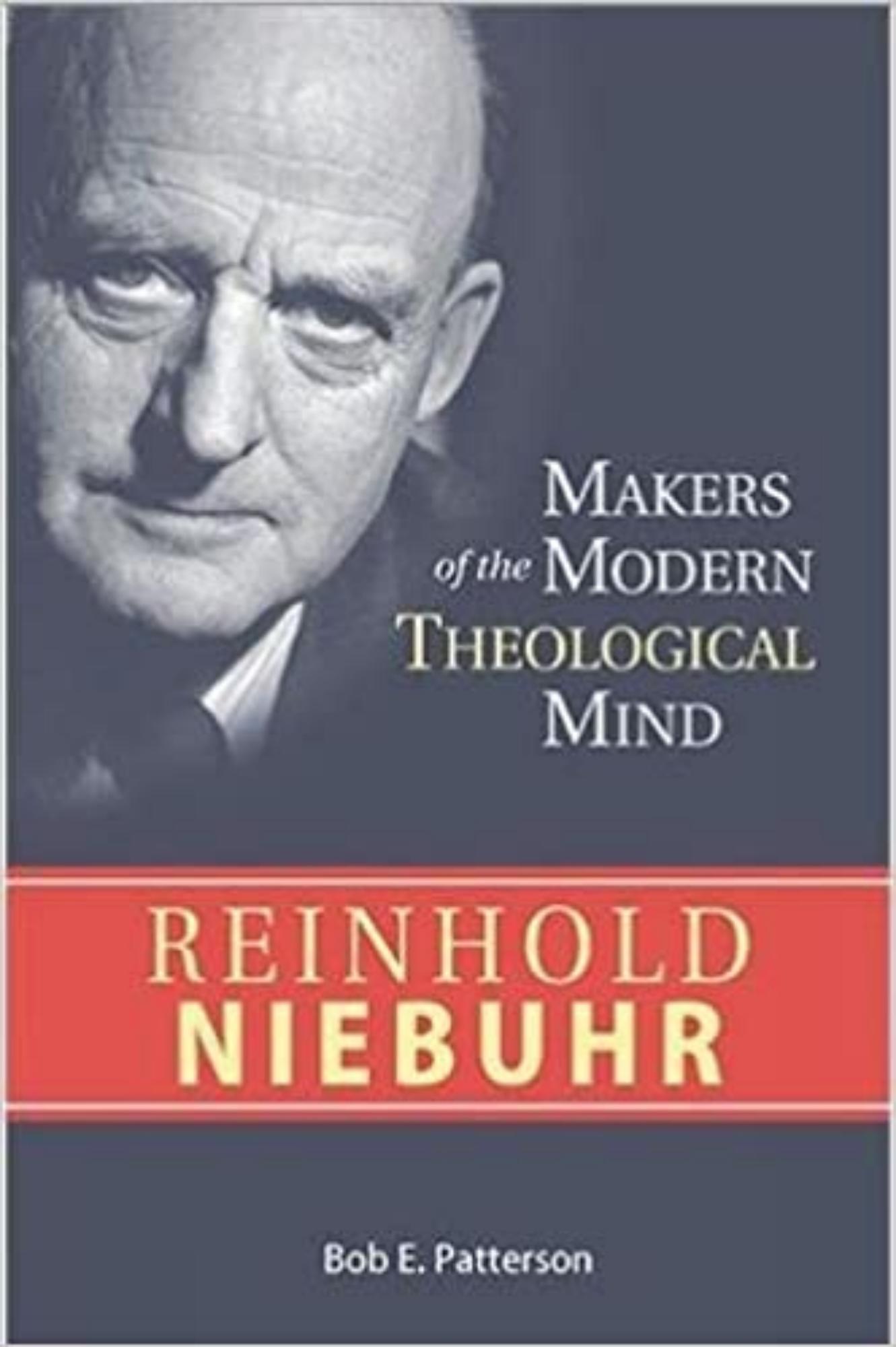
Arguably the most influential American theologian since Jonathan Edwards, Reinhold Niebuhr (1892-1971) was the one American who found a comfortable place in a modern Pantheon comprised mainly of Europeans. This volume from The Makers of the Modern Theological Mind series offers a guide to the life and theology of Niebuhr.
His doctrine of "sin as pride" has become a modern classic, and he helped many to see how "anxiety" is the matrix for both inordinate self-assertion and sensuality. Not only was he a brilliant and articulate thinker, but Niebuhr was also a deeply compassionate, sensitive human being and an ardent champion of social justice. He remains a model for us today as he teaches us how to communicate the gospel in a secular age.
163 pages
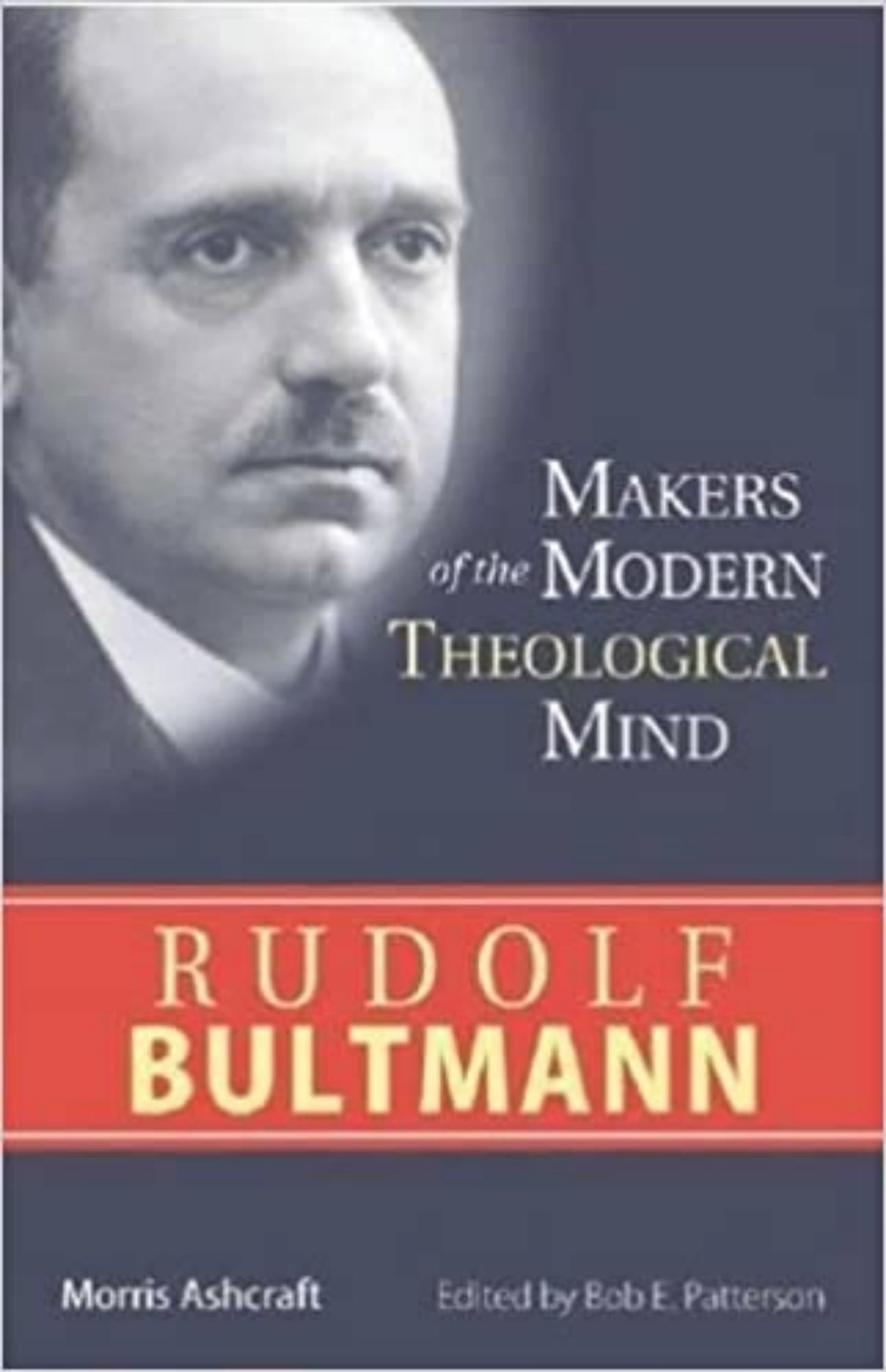
About the Makers of the Modern Theological Mind series
Who are the thinkers that have shaped Christian theology in our time? This series tries to answer that question by providing a reliable guide to the ideas of the men who have significantly charted the theological seas of our century. Each major theologian is examined carefully and critically-his life, his theological method, his most germinal ideas, his weaknesses as a thinker, his place in the theological spectrum, and his chief contribution to the climate of theology today.
124 pages
Who is the God of the gospel? Robert W. Jenson's way of answering this question, according to Scott Swain, hinges on the nature of the relationship between God in himself and the redemptive events through which God becomes our God. Swain first locates Jenson's pursuit of a relentlessly "evangelical" understanding of God in the broader history of trinitarian theology after Karl Barth, before carefully and sympathetically unpacking Jenson's doctrine of the Trinity. For Jenson, one of today's most prominent theologians, the answer to the question, "Who is the God of the gospel?" may be summarized as, "The one who raised Jesus from the dead." Swain then offers a constructive evaluation of Jenson's account of the mutually constitutive character of God's intrinsic identity and saving acts. Although critical of many of Jenson's trinitarian reinterpretations, Swain remains attentive to Jenson's concerns and insights. In the process, Swain sheds new light on what it means for the ecumenical trinitarian tradition to advocate a truly evangelical doctrine of the Trinity in the wake of the twentieth-century recasting of the identity of the God of the gospel.
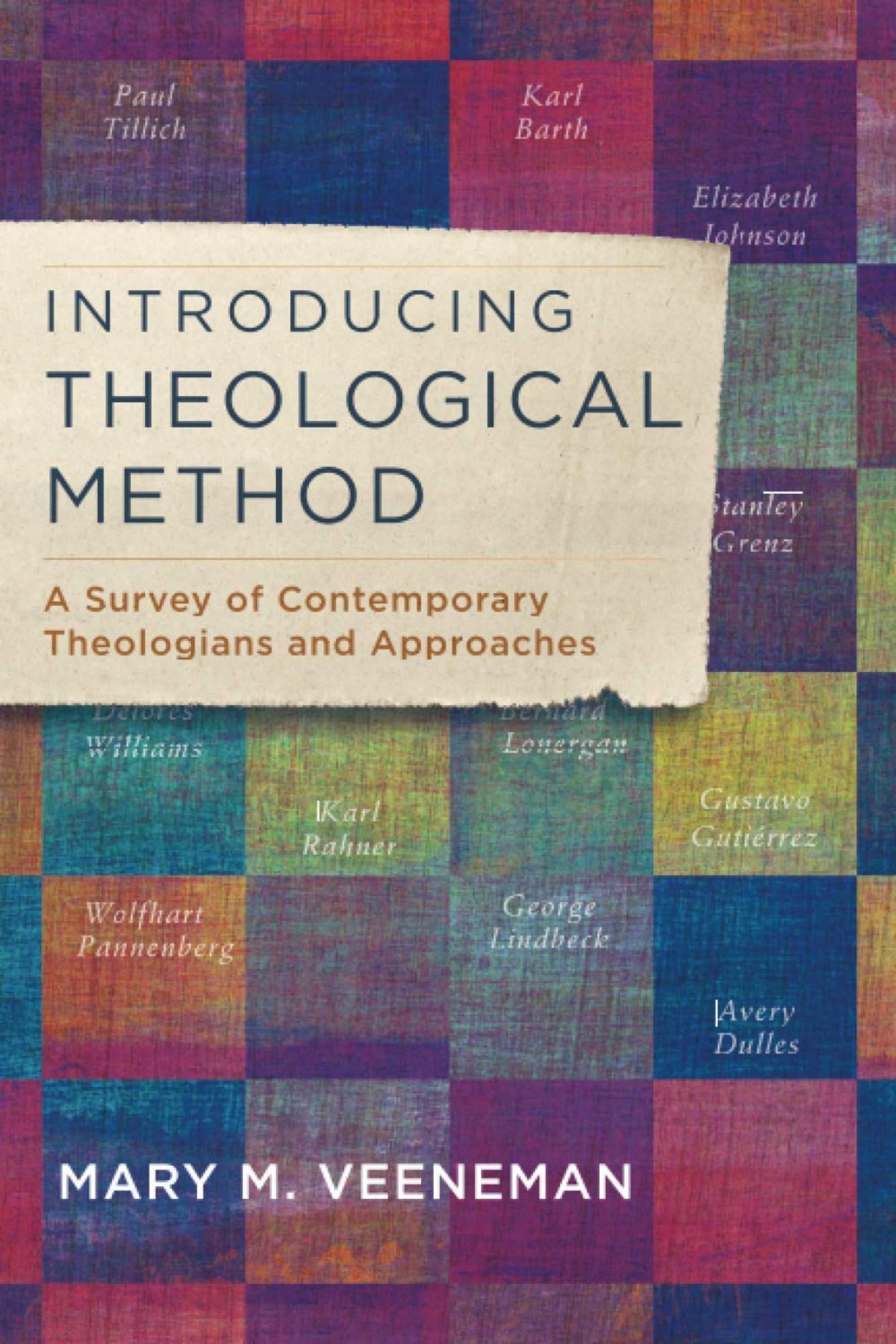
"I wish I'd had this book when I first started graduate school in theology. Veeneman picks out a large number of major theological movements and calmly rehearses their methodological commitments. She catalogs their sources, their orienting questions, and their starting points, sometimes comparing them to each other but rarely declaring her own judgments. The result is almost a cheat sheet, letting students know in advance what to look for as they go on to read these authors."
--Fred Sanders, Torrey Honors Institute, Biola University
"Veeneman offers us a wide-ranging and sympathetic study of theologians from a variety of traditions and schools of thought, allowing the reader to make independent judgments. This is an ideal introduction for students coming from many different perspectives. Nobody can relate equally well to every modern theologian, but this book will help us evaluate the approaches of those with whom we disagree as well as deepen our understanding of our own mentors. Highly commended!"
--Gerald Bray, Beeson Divinity School, Samford University
224 pages
Whenever we read, think, hear or say anything about God, we are doing theology. Yet theology isn't just a matter of what we think. It affects who we are. In the tradition of Helmut Thielicke's A Little Exercise for Young Theologians, Kelly Kapic offers a concise introduction to the study of theology for newcomers to the field. He highlights the value and importance of theological study and explains its unique nature as a serious discipline. Not only concerned with content and method, Kapic explores the skills, attitudes and spiritual practices needed by those who take up the discipline. This brief, clear and lively primer draws out the relevance of theology for Christian life, worship, mission, witness and more. "Theology is about life," writes Kapic. "It is not a conversation our souls can afford to avoid."
This work deals with the basic questions that are tackled by liberation theology--oppression, violence, domination and marginalization. It then goes on to show how the Christian faith can be used as an agent in promoting social and individual liberation, and how faith and politics relate.
Karen Kilby has successfully taken the difficult and obscure work of Karl Rahner and presented it in a clear, fascinating way that explains the man and his religious quest.
"A thoughtful, compelling, and substantial reflection on the intersection of networked religion and Christian theology. The authors' distinctive backgrounds--his in computer science, hers in media studies--offer unique perspectives from which to consider difficult questions about identifying and loving our neighbors in the midst of digital cultures. An excellent text for both seminary and congregational study."
Compelling social perspectives from a prominent Catholic scholar Pope Francis in a 2013 interview famously likened the church to a field hospital. In this book William Cavanaugh adopts Pope Francis's metaphor to show how the church can help heal both the spiritual and the material wounds of the world. As he examines the intersection of theology with themes of religious freedom, economic injustice, religious violence, and other pressing topics, Cavanaugh emphasizes that the church cannot condemn the evils of the world from a position of superiority. Rather, he says, its practices of solidarity with humanity must be based on a profound recognition that the church shares in the guilt of human sin. Cavanaugh's Field Hospital provides guideposts for a church that is willing to go outside of itself onto today's battlefields — both metaphorical and literal — not to inflict wounds but to bind them up and heal them.
Adopting a unique appraoch among inroductions to Christian ethics, Kyle Fedler's Exploring Christian Ethics guides students through the moral decision-making process by providing foundational material in both ethical theory and biblical ethics. First, Fedler introduces the reader to the discipline of ethics, then he explores the ways Scripture can be used responsibly in Christian ethics, and finally, he presents and analyzes the sections of Scripture that have been most influential in Christian morality and ethics.
Will the real Martin Luther please stand up?
After five hundred years of examining the life of the "father of the Reformation," we must surely know all there is to know about Martin Luther. But is that true?
Did he really nail his Ninety-Five Theses to the church door?
Did he throw an inkpot at the devil?
Did he plant an apple tree?
Did his wife escape her convent in a herring barrel?
German radio and television journalist Andreas Malessa looks at the actual history of Luther and concludes that many of the tales we know best are nothing but nonsense.
Diving gleefully into the research, Malessa investigates many of the falsehoods and fallacies surrounding the reformer, rejecting them in favor of equally incredible facts. Full of humor and irony, this book educates and entertains while demonstrating a profound respect for Luther's life and mission.
If you're looking for the truth of the man behind the theses, come discover his faith and influence--with the myths stripped away.
168 pages